
- August 4, 2026
- Posted by: SVB
- Categories: Featured Articles, Features, Home News, Industry News, News

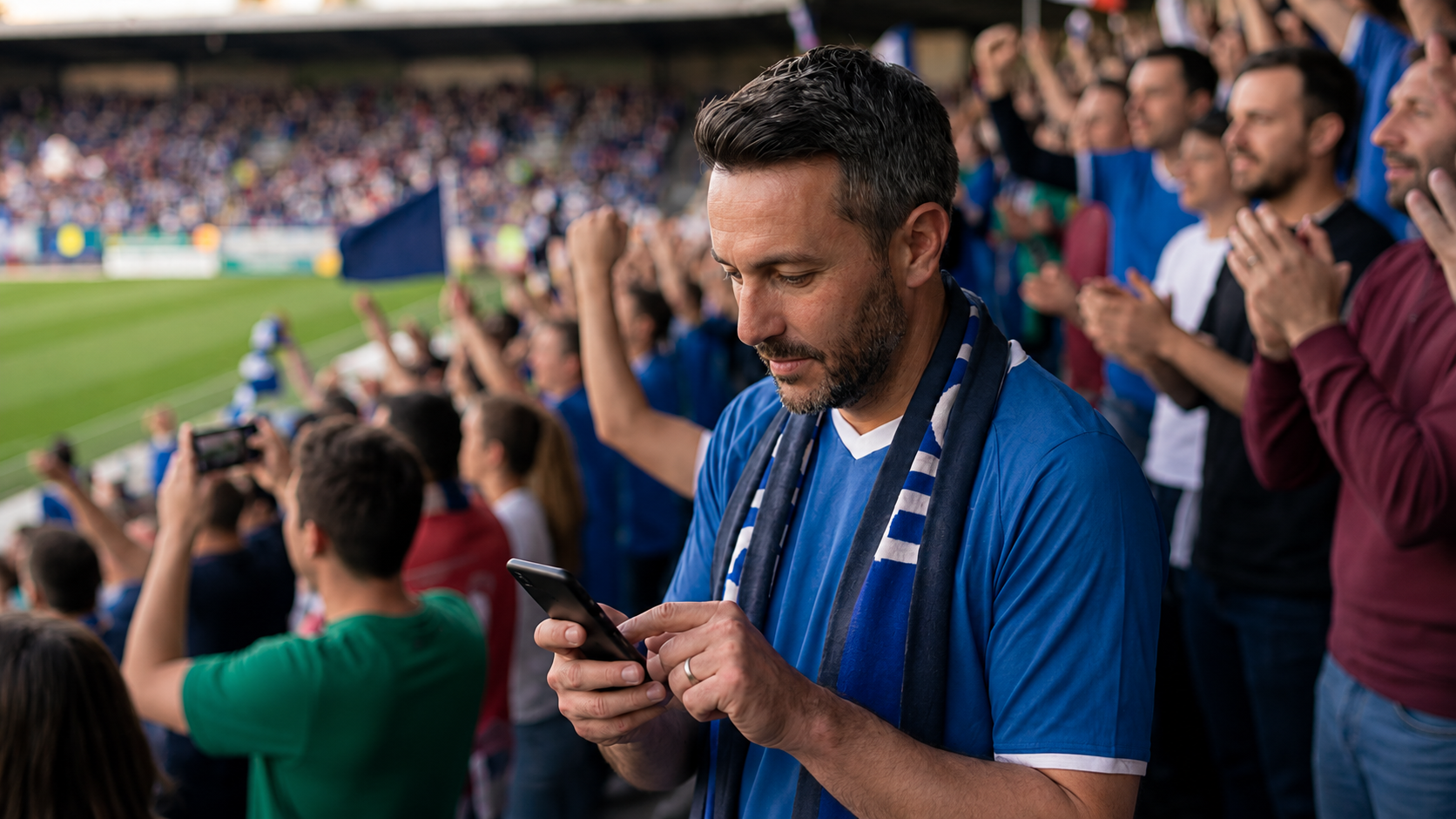
The Premier League season kicks off in a couple of weeks, and many stadiums across the country will fill up again for the first time since May. For most fans, mobile connectivity will not cross their minds until it fails. A ticket that won’t load at the turnstile, a message to friends that won’t send, a score update that won’t come through.
That gap between expectation and reality is exactly what our venues need to close, and not just for football.
Over the next two years, the UK will host a run of major events that put a much wider range of venues in the spotlight. Birmingham stages the Invictus Games in July 2027.
Weeks later, London hosts the EuroHockey Championships, with group games at the Lee Valley Hockey and Tennis Centre and the semi-finals and final at Twickenham Stoop.
Not to mention the UEFA European Championship in 2028. Stadium operators and arena managers of all shapes and sizes across the country should be thinking about connectivity ahead of hosting large international crowds.
The scale of demand this creates is easy to underestimate. American stadiums have spent years building high-density wireless networks to cope.
The 2026 SVB LIVE Conference & Exhibition – focused on elevating the live experience across sports and entertainment – is being hosted at Everton FC’s spectacular new Hill Dickinson Stadium, Oct 1st and 2nd, with an Opening Night Icebreaker at Liverpool FC’s iconic Anfield Stadium, Sept 30th.
 The Super Bowl saw almost 76 TB of cellular data used during this year’s game. By contrast, UK stadiums are still largely retrofitting connectivity into venues that were not designed with connectivity in mind, and, as fan expectations rise, the shortfall becomes harder to ignore.
Stadiums can also be challenging environments in which to deliver mobile connectivity. When you gather tens of thousands of people in a concentrated area, all wanting to use their mobile devices, it places huge capacity demands on mobile networks.
Combine this demand with the concrete and steel used to construct stadiums, which block signals from outdoor masts, and it is easy to see why mobile service in the crowd slows.
This demand comes from many sources at once. Fans need signal to get through the gate and find each other once they are inside. For example, parents keeping track of children in a crowded concourse depend on reliable coverage.
Some of it is about the experience once they are in their seats, such as sharing on social media, following other scores, or checking a fantasy team. When a network cannot keep up, that frustration colours the whole experience.
Mobile connectivity is not only a fan issue. Stewards, medical teams and emergency services rely on it to coordinate across a large site. Hospitality staff depend on it to take orders and manage stock during peak periods. Venues cannot afford delays when hosting a global audience.
The right option
There are options for stadiums looking to solve this challenge. For large stadiums, a distributed antenna system (DAS) is the right solution. By working with a neutral host, a provider that can work with all the mobile operators on a stadium’s behalf, venues can deliver multi-operator coverage.
A DAS works by distributing a venue’s signal across a series of antennas positioned throughout the building, rather than relying on a handful of external masts to cover the whole site.
That approach delivers a strong, consistent signal throughout seating areas, concourses and hospitality spaces, while maintaining performance during periods of high demand, such as half-time or the end of a match. It is built for the kind of simultaneous demand seen in the biggest American stadiums and at global tournaments.
Smaller venues, with fewer people, do not carry the same volume of traffic, making small cells a viable option. These are compact, low-power antennas that can be installed discreetly throughout a venue to extend coverage and add capacity in a more targeted way than a full DAS deployment. They can support all the UK’s mobile operators over one shared piece of infrastructure for the benefit of both fans and operations.
Getting either solution right takes proper planning. Seating layouts, roof structures and the area around a venue all affect how the in-building mobile system needs to be designed and deployed, and retrofitting an older venue brings its own considerations. None of that makes it impossible, but it does mean starting early, with infrastructure that can serve every network operator rather than locking a venue into one.
With the domestic season starting, Birmingham and London on the international stage within the next two years, and UEFA Euro 2028 not far behind, UK venues of every size have a reason to treat mobile connectivity as core infrastructure now, rather than something to fix once the world is already watching.
By Brendan Hourihane, Senior Director at connectivity infrastructure-as-a-service provider Freshwave.

SVB LIVE provides an unrivalled global community, with opportunities to network, collaborate and explore new possibilities year-round via the SVB LIVE Business Club.

Check out the latest sports & entertainment venue development data from across the globe in the exclusive, subscription-only, SVB Global Report here.