- March 30, 2026
- Posted by: SportsV
- Categories: Design Competitions, Featured Articles, Features, Home News, Industry News, News, Press Releases
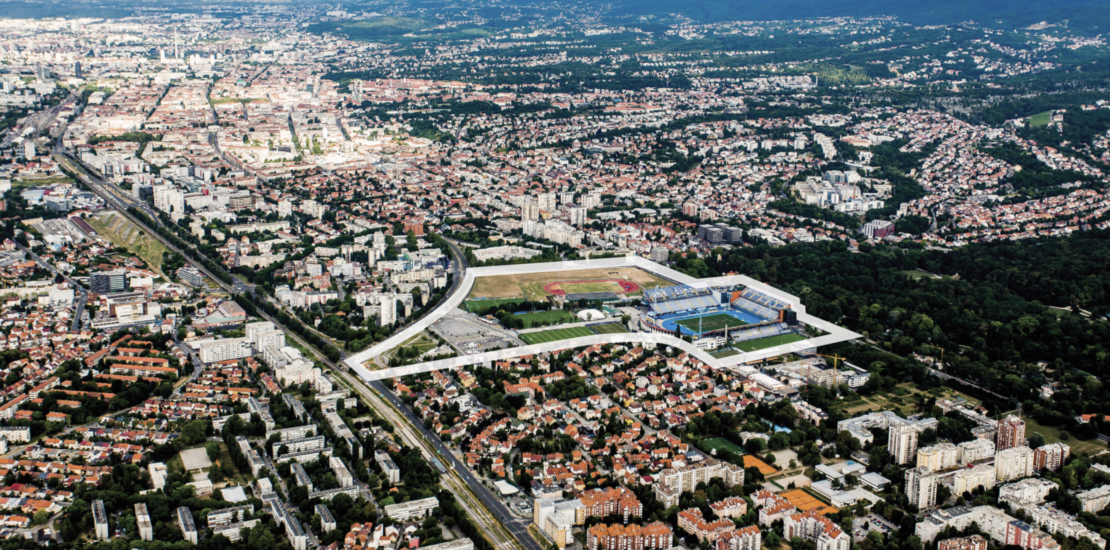
Following a landmark agreement between the City of Zagreb and the Croatian Government, an urban-architectural competition has been launched for the new Maksimir Stadium and Svetice Sports Centre. This €224 million joint investment aims to replace aging infrastructure with a world-class, integrated sports precinct. Visionary designs are invited for a 35,000-seat stadium and a ‘City of Sport’ that honours the site’s historic character while meeting 21st-century athletic needs.
The City of Zagreb and the Zagreb Society of Architects (DAZ) are conducting an international architecture competition for Maksimir Stadium and Svetice Sports and Recreation Centre.
The competition is conducted in a single stage as an open, urban-architectural ideas and project competition. The ideas competition encompasses the Svetice Sports Centre and Borongaj Transit Hub (zones A+D) to explore spatial approaches without the commissioning of services. The project competition focuses on the Maksimir Football Stadium Complex (zone C) specifically for the purpose of commissioning design services.
Objective of the Competition
The objective is to select the best architectural and urban design for the Maksimir Stadium Complex, Svetice Sports Centre, and Borongaj Transit Hub that fulfills the Contracting Authority’s requirements and evaluation criteria.
Located in eastern Zagreb, the historic Svetice-Maksimir district has thrived as a sporting heartbeat since the late 19th century. At its core stands the iconic Maksimir Stadium, a true landmark of Croatian sports architecture. As a site celebrated for its architectural innovation, any new development must thoughtfully harmonise with the lush landscape and ecological heritage of the adjacent protected Maksimir Park.
More Than A Stadium
Tomislav TOMAŠEVIĆ, Mayor of the City of Zagreb, and Luka KORLAET, Deputy Mayor of the City of Zagreb, said:
“Zagreb is a city of sport, home to numerous clubs with long-standing traditions and internationally recognised achievements. However, the city’s sports infrastructure has yet to fully reflect this level of excellence. This disparity is particularly evident in our football stadiums, which remain inadequate despite the remarkable success of our local and national teams.
“The architectural competition for Maksimir Stadium and Svetice Sports Centre is the most significant and extensive undertaking in Zagreb in recent decades. Our aim is to reshape this symbolically and historically powerful site, which is deeply rooted in the identity of Zagreb and Croatian football. Although the original stadium complex was conceptually powerful, decades of additions and partial renovations have substantially compromised its architectural integrity.
“Our vision extends beyond the mere construction of new facilities. This area is more than just a hub for sport and recreation; it is a symbolic urban landmark and a defining feature of Zagreb’s identity – the eastern gateway to the city center, situated along one of our most vital urban avenues. Such a location demands thoughtful spatial articulation, architectural excellence, and long-term responsible management.
“We envision this site as a multifaceted social and spatial “City of Sport” – an open and inclusive environment for professional athletes, recreational users, fans, and all our fellow citizens. We invite you to contribute to this new chapter of Zagreb’s sports infrastructure and to become a part of its future development.”
Competition site
Svetice Sports and Recreation Centre, together with Maksimir Stadium, occupies a prominent position on the eastern edge of Zagreb’s city centre, adjacent to the historic Maksimir Park. It is one of the city’s most significant sports sites, known for its long tradition of athletic facilities and the iconic Maksimir football stadium.
The 2026 SVB LIVE Conference & Exhibition – with a focus on elevating the live experience through pillars including Architecture and Design – is being hosted at Everton’s spectacular Hill Dickinson Stadium, October 1st and 2nd, with an Opening Night Icebreaker at Liverpool FC’s iconic Anfield on September 30th.
The immediate vicinity of Maksimir Park creates a unique ambient setting, making future development of this area particularly important. Any further planning should be approached thoughtfully, with careful consideration of the urban context and the city’s broader green infrastructure network.
 The competition was launched on March 20th 2026 following a landmark agreement between the City of Zagreb and the Croatian Government. This €224 million joint investment aims to replace aging infrastructure with a world-class, integrated sports precinct. The organisers invite visionary designs for a 35,000-seat stadium and a ‘City of Sport’ that honours the site’s historic character while meeting 21st-century athletic needs.
Competition entries will be judged by an international panel of architects, including François Chas (NP2F, France), Kersten Geers (OFFICEKGDVS, Belgium), Vasa Perović (BEVK PEROVIĆ ARHITEKTI, Slovenia, Vice President of the Jury), Nenad Fabijanić (STUDIO FABIJANIĆ, Croatia), Toma Plejić (STUDIO UP, Croatia, President of the Jury), and Mia Roth-Čerina (ROTH&ČERINA ARHITEKTI, Croatia), as well as state and city officials.
David Hines is ‘expert advisor’ to the completion jury team.
The updated deadlines are as follows:
Competition Entry Submission via EOJN RH: July 17th 2026 by 18:00
Model Submission: July 28th 2026 by 18:00
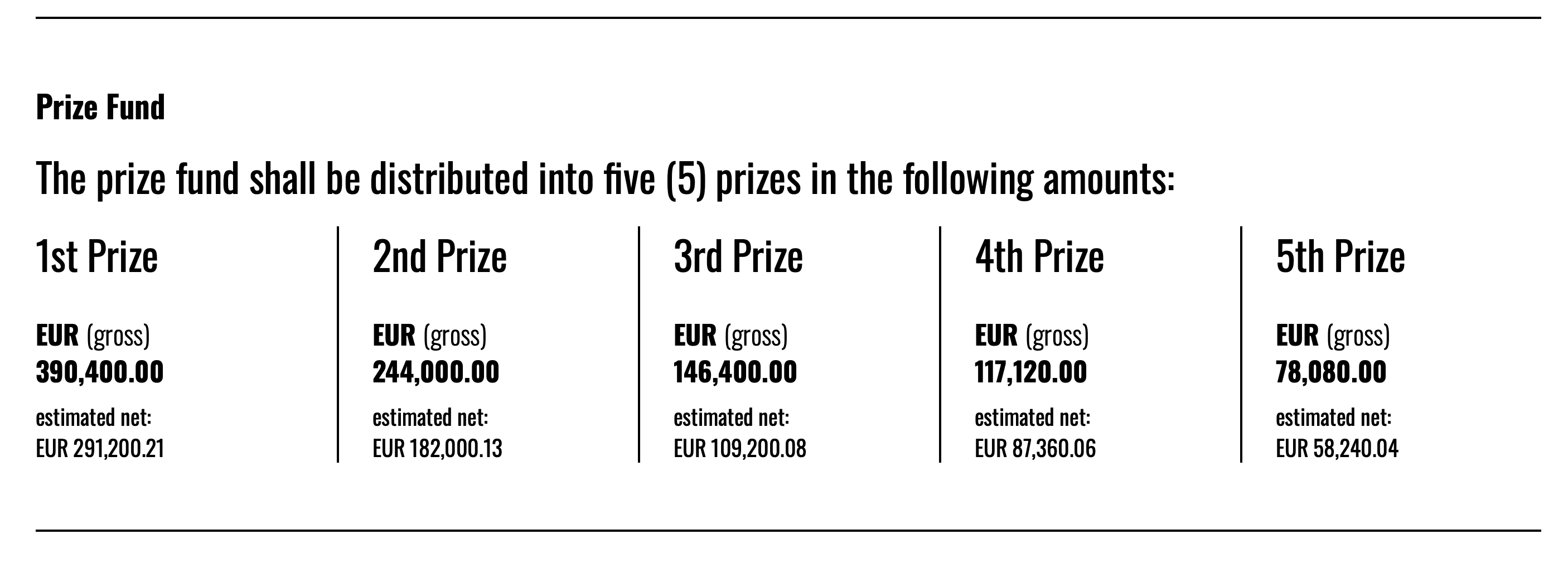
Complete competition and procurement documentation can be found online here.
SVB LIVE provides an unrivalled, global community, with opportunities to network, collaborate and explore new possibilities year-round via the SVB LIVE Business Club.

Check out the latest sports & entertainment venue development data from across the globe in the exclusive, subscription-only, SVB Global Report here.