
- June 30, 2026
- Posted by: SVB
- Categories: Featured Articles, Features, Home News, Industry News, News
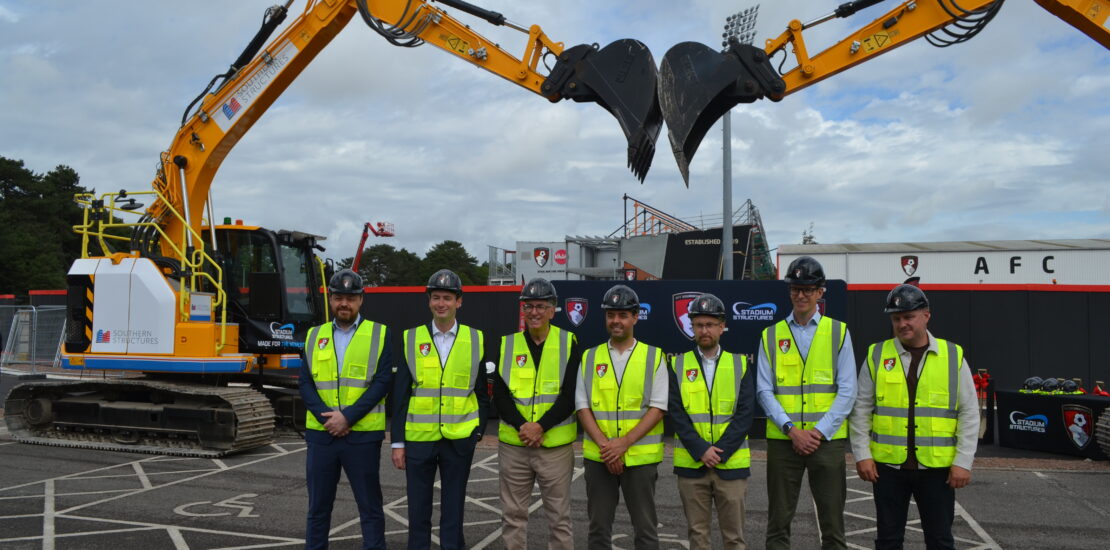
AFC Bournemouth held an official groundbreaking ceremony today for the expansion project at Vitality Stadium that is planned to nearly double the English Premier League stadium’s capacity.
The expansion of Bournemouth’s Vitality Stadium, which will be carried out over the next 18 months, marks a major milestone in the club’s development and reflects its ambition to establish itself as a permanent fixture in the Premier League.
Since earning promotion to England’s top-flight, AFC Bournemouth has consistently operated with the league’s smallest stadium, limiting both matchday revenue and the number of supporters able to attend home fixtures.
With a current capacity of just over 11,000, demand for tickets has regularly exceeded supply, prompting the club to pursue a comprehensive redevelopment that will almost double the stadium’s size to approximately 20,500 seats.
The project is intended not only to accommodate more fans but also to strengthen the club’s financial position and create a modern sporting venue capable of supporting future success.
The redevelopment follows years of discussion regarding Bournemouth’s long-term stadium strategy.
Rather than relocating to a completely new site, the club decided to invest in expanding its historic Dean Court home, now known as the Vitality Stadium.
This approach allows Bournemouth to preserve its connection with the local community while significantly upgrading facilities to Premier League standards.
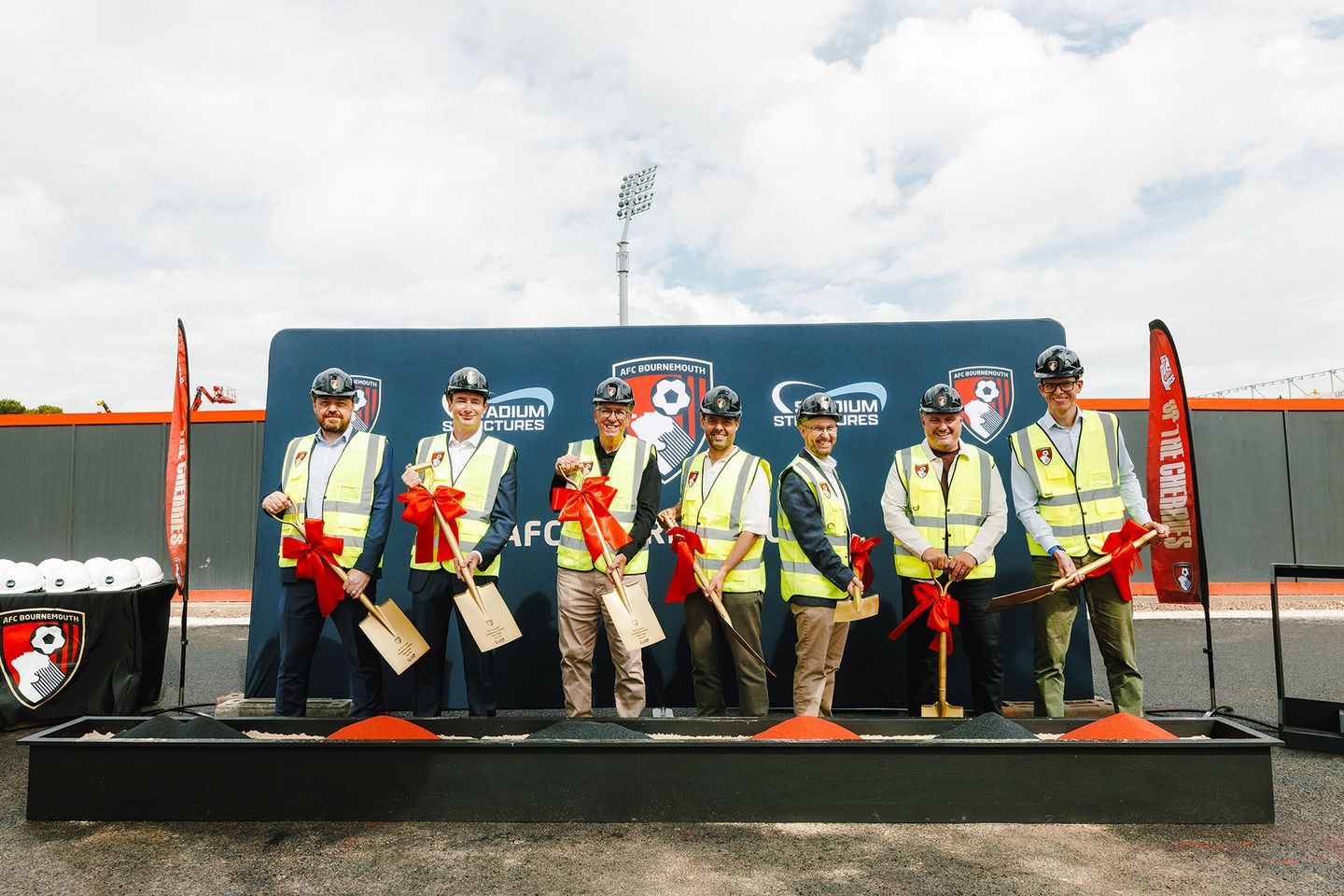 Jim Frevola, CEO & President of Business Operations – AFC Bournemouth, said at the ceremony:
“Today marks much more than the beginning of a construction project, it marks the beginning of the next chapter in our club’s history and it’s really exciting to be a part of that.
“I’d like to first thank Bill Foley and our entire ownership group. Bill’s belief in this football club since the first day that that he took over, this community and what AFC Bournemouth can and has become has been unwavering. His vision, ambition and willingness to invest in this town and in the future have made today possible.”
Stadium Structures is a key sponsor for the 2026 SVB LIVE Conference & Exhibition – focused on elevating the live experience across the sport & entertainment ecosystem – being hosted at Everton FC’s spectacular new Hill Dickinson Stadium on October 1st and 2nd, with an Opening Night Icebreaker at Liverpool FC’s iconic Anfield Stadium on September 30th.
Local MP Tom Hayes was present at the ceremony and Frevola thanked hime and BCP Council for their partnership throughout the past 18 months. He added:
“I’d also like to thank the Stadium Structures team and all the participating contractors for your tremendous professionalism, your expertise and dedication to arriving at this stage.
“I want to thank our supporters. Really this day belongs to all of you. All the supporters for the generations who stood behind this club and packed the stadium. Our vision is to preserve everything that makes Vitality Stadium special – the atmosphere, the intimacy, the connection between the players and supporters.
“But we are also creating a modern home that everybody can be proud of for decades to come. This project is more than just seats, it’s for every supporter who walks through these gates for whom we wanted to keep our ancestral home at Vitality Stadium.
“It’s about securing the future for the next generation of supporters and I’ve been very vocal about this. It is about getting them to bring their family, their partner. It’s not about bringing in people from different countries or different regions of the world, this is about bringing in people from Dorset. This is Dorset’s football club this is BCP’s football club and that’s what this moment is about today.”
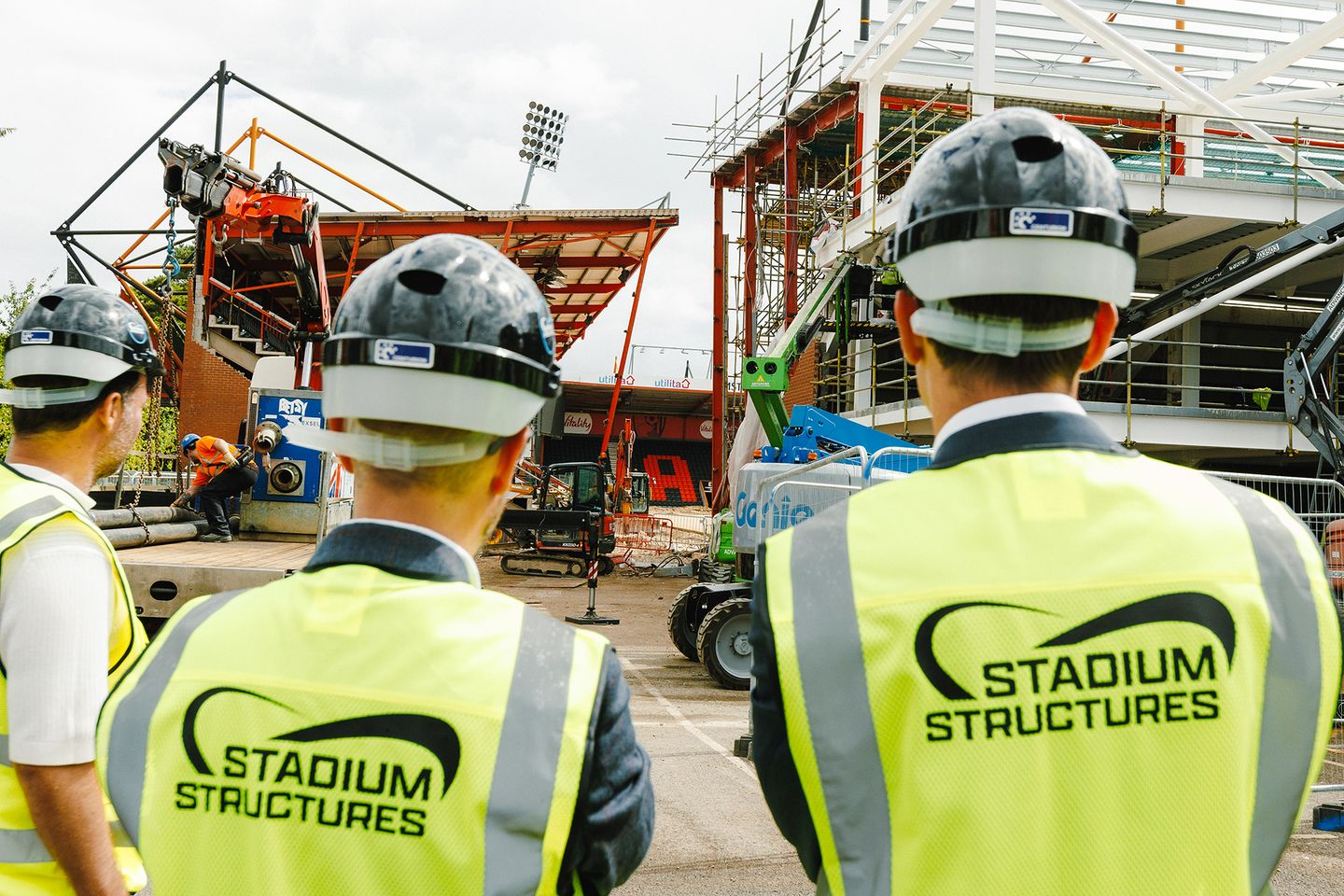 Construction is expected to take place in carefully managed phases so that the team can continue playing home matches throughout the redevelopment.
The most significant aspect of the project is the complete replacement of the existing South Stand. The current stand will be demolished and rebuilt as a modern grandstand capable of accommodating approximately 7,000 spectators, dramatically increasing capacity while providing improved sightlines, enhanced accessibility and upgraded supporter facilities.
The new South Stand is expected to become the stadium’s focal point, incorporating hospitality suites, premium seating, media facilities and improved concourse areas designed to enhance the overall matchday experience.
The existing South Stand will remain in place while the new structure is built behind it.
Alongside the South Stand redevelopment, the North and East Stands will also undergo substantial expansion.
Rather than replacing these structures entirely, the club intends to extend them vertically and horizontally, increasing seating while maintaining much of the existing framework. This approach reduces construction costs and minimises disruption during the building process.
In addition, all four corners of the stadium will be filled in, creating a more enclosed bowl design that increases capacity while improving the stadium’s atmosphere by keeping crowd noise within the ground.
Doug Williams, Project Director for Stadium Structures, told SVB on a tour of the site:
“We’re removing the existing roof on the north stand and building a new structure behind it with an additional 10 rows of seating.
“All the four corners are getting in-filled which means all the existing lighting poles have to be taken down and relocated. We’re putting a new roof on the West Stand over the terrace and over the hospitality. There are four hospitality lounges in the West Stand and the premium lounge. Work on those is underway and they’ll be ready for next season.”
A new pitch is also currently being installed at the stadium. Williams added:
“We’re in the process of replacing all the existing seats together with putting a new roof on the West lounge and there’s a new gangway that’s being formed in the middle of the East Stand.
“Every seat is going to be replaced with the exception of a few VIP ones at the back of the stand. Ultimately there will be just under 20,500 seats, although there are still a few tweaks to be made.”
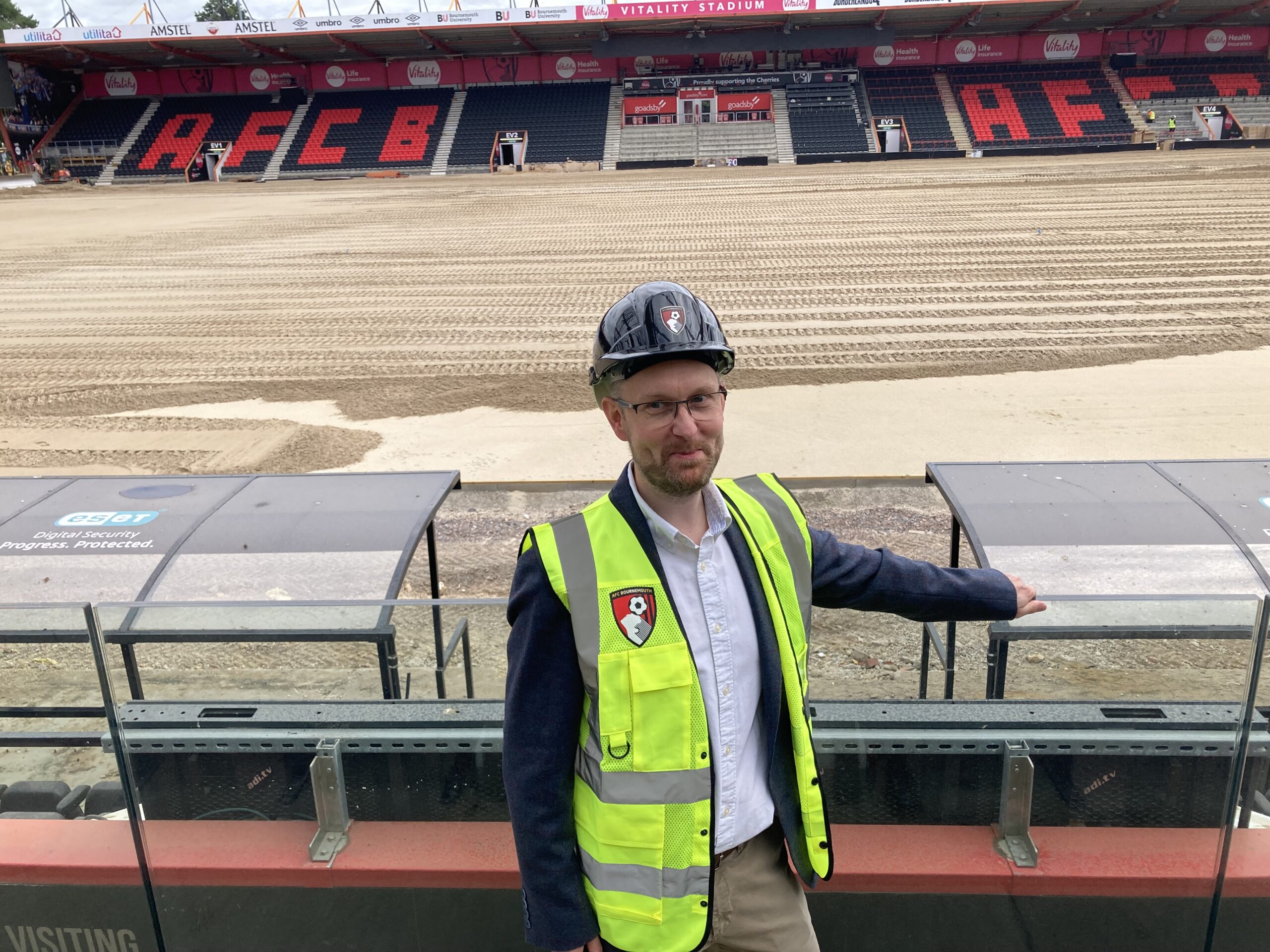
Williams said the project presented unique challenges with the construction teams working within a tight footprint close to houses and gardens. He added:
“The challenges are what you’d expect for doing a refurbishment of an existing stand rather than on a normal building. All the work has to be condensed into the close season so it’s all about speed as well.
“We’ve got building work and demolition going on at the same time so with all those different activities it’s a bit of a challenge and it’s quite fulfilling to see it all come together.”
A team of around 100 construction workers is on site every day to get the job done.
The redevelopment extends well beyond simply adding seats. A major objective is to modernise the entire stadium and create a venue capable of generating significantly greater commercial income throughout the year.
New hospitality lounges, executive boxes and premium dining facilities will provide additional revenue opportunities on matchdays while also allowing the stadium to host conferences, corporate events and private functions outside the football season.
Expanded food and beverage outlets, improved retail facilities and upgraded washrooms will enhance the experience for supporters, while new media areas will meet the increasingly demanding broadcasting requirements of Premier League football.
Accessibility has also been placed at the centre of the redevelopment plans. The expanded stadium will include improved wheelchair-accessible seating, additional accessible toilets, better lift access and redesigned circulation routes to ensure supporters with disabilities can enjoy a more comfortable and inclusive matchday experience.
New ticketing facilities, relocated turnstiles and improved crowd management systems are also intended to reduce congestion and improve safety before and after matches.
Transport and infrastructure improvements form another important part of the overall development. The club is working alongside local authorities to improve pedestrian access, traffic management and public transport links serving the stadium.
As attendances increase, careful planning will be required to minimise disruption to nearby residential areas while ensuring supporters can travel efficiently to and from matches. Landscaping and public spaces surrounding the stadium are also expected to be enhanced, creating a more welcoming environment for fans and visitors.
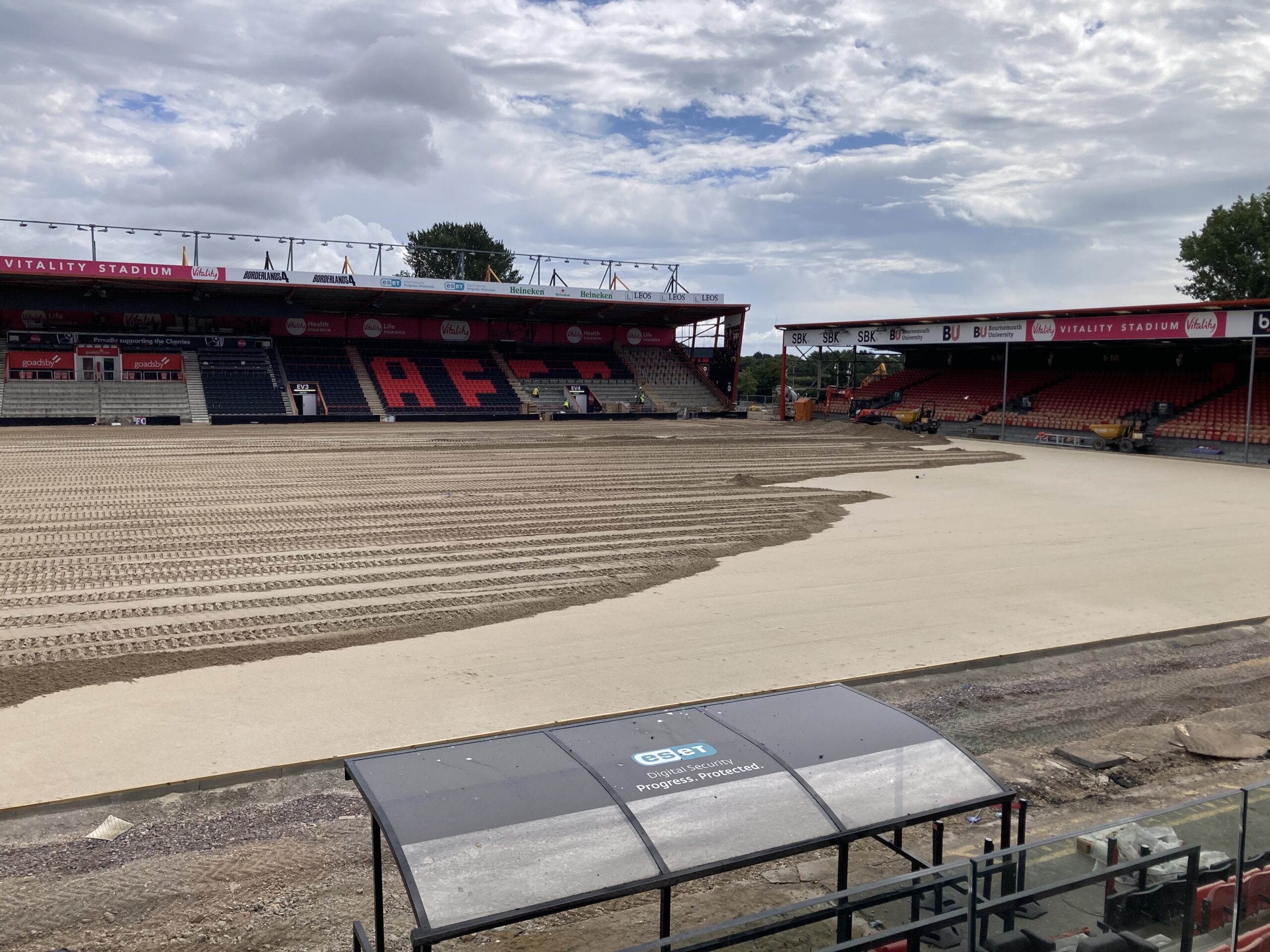
Financially, the expansion is viewed as essential for Bournemouth’s long-term sustainability. Matchday revenue represents a crucial income stream for Premier League clubs, and Bournemouth has historically generated considerably less income than many of its rivals because of its limited stadium capacity.
The project reflects the ambitions of the club’s ownership, which has consistently invested in strengthening Bournemouth’s infrastructure as well as its playing squad.
Club officials believe the expanded stadium will help Bournemouth remain competitive in the Premier League by providing greater financial stability under football’s increasingly demanding financial regulations. A larger venue also improves the club’s ability to attract new supporters, commercial partners and high-profile players, all of whom are influenced by the quality of facilities available.
Beyond football, the redevelopment is expected to deliver wider economic benefits for the local area. Larger crowds will generate increased spending in local hotels, restaurants, pubs and retail businesses on matchdays, while construction itself will support employment throughout the project.
The improved stadium will also be capable of hosting community events, business conferences and other entertainment activities, creating a valuable asset for Bournemouth beyond its role as a football ground.
By combining increased capacity with modern facilities, improved accessibility and enhanced commercial opportunities, the redevelopment aims to ensure the Vitality Stadium continues to serve as a sustainable home for Bournemouth while supporting the club’s ambitions both on and off the pitch for many years to come.
SVB LIVE provides an unrivalled global community, with opportunities to network, collaborate and explore new possibilities year-round via the SVB LIVE Business Club.

Check out the latest sports & entertainment venue development data from across the globe in the exclusive, subscription-only, SVB Global Report here.