
- May 20, 2026
- Posted by: SVB
- Categories: Home News, Industry News, News, Safety & Security
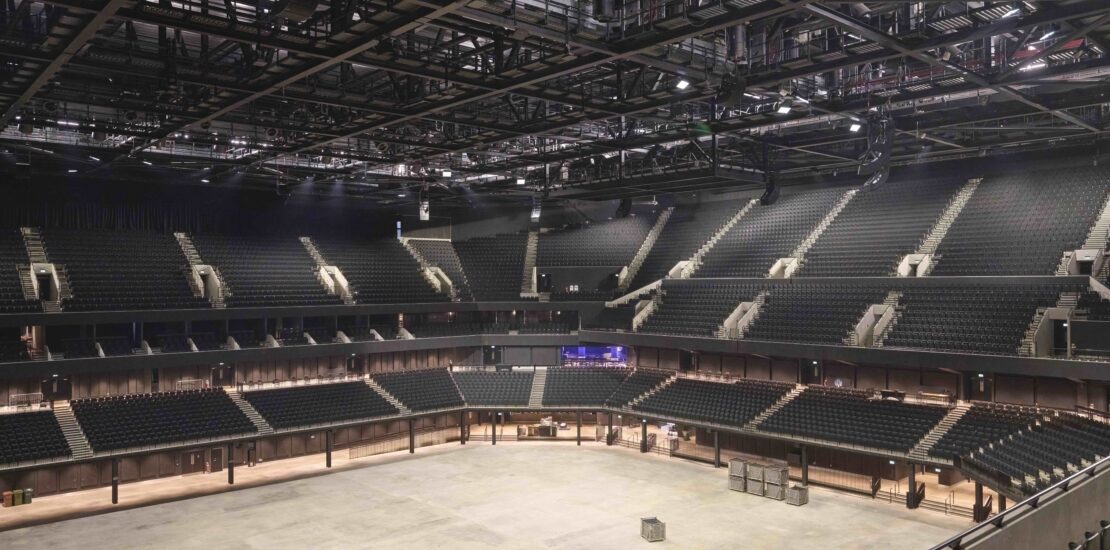
PwC’s Sports Industry Outlook 2025 projects the global sports market will grow by 8.7% in 2026, with the Middle East positioned as one of the fastest-maturing regional contributors. Significant infrastructure investments, ambitious national strategies and the region’s successful track record of hosting world-class events drive this momentum. For instance, Saudi Arabia’s selection as host of the 2034 FIFA World Cup signals that major stadiums and multi-purpose venues will remain central to this region.
As the scale of these projects increases, so too does the responsibility to ensure they meet the highest safety and durability standards. One of the major shifts underway is the region’s move away from British Standard (BS) 476 Parts 20 and 21 for passive fire protection toward internationally recognized performance-based standards.
Evolving Fire Standards in the Middle East
For decades, BS 476 Parts 20 and 21 influenced fire protection strategies across the Middle East. Historical connections and long-standing familiarity made the standard a common reference point. These two parts define how to test the fire resistance of structural building elements, focusing on integrity, insulation and load-bearing capacity.
However, BS 476 Parts 20 and 21 are fire test methods only. They describe how a specimen is exposed to fire in a controlled laboratory setting, but they do not explain how to apply those results to broader design scenarios. Guidance documents such as the Association for Specialist Fire Protection (ASFP) Yellow Book, Edition 5, provide interpretation frameworks, yet the standard itself does not deliver system-level design clarity.
The 2026 SVB LIVE Conference & Exhibition – with a focus on elevating the live experience – is being hosted at Everton’s new Hill Dickinson Stadium on October 1st and 2nd, with an Opening Night Icebreaker at Liverpool FC’s Anfield stadium on September 30th.
As commercial infrastructure in the Middle East becomes more complex, many authorities support globally recognized standards that provide stronger system-based evaluations and third-party oversight. For example, the Saudi Building Code (SBC) now references Underwriters Laboratories (UL) 263 as its preferred standard for evaluating structural fire resistance.
Compared with UL 263 or American Society for Testing and Materials (ASTM) E119, BS 476 lacks the ability to evaluate fire performance under realistic load and restraint conditions. It does not simulate complete building systems as today’s projects require.
The United Kingdom’s regulatory guidance will remove references to BS 476 for fire resistance testing as of September 2029. That decision reflects the standard’s limited ability to meet present-day safety and design needs. For large-scale commercial projects in the Middle East, many of which involve international design teams and long development cycles, continued reliance on a standard being phased out introduces unnecessary long-term risk.
Any fire resistance specification selected today must still be recognized and enforceable in 10 to 15 years. Specifying UL 263 or ASTM E119 helps ensure performance clarity, regulatory durability and alignment with global best practice.
Real-World Fire Testing in Stadium Construction
In stadium construction, fire protection systems may pass a controlled test but perform differently under real loading conditions, environmental stress and construction variables.
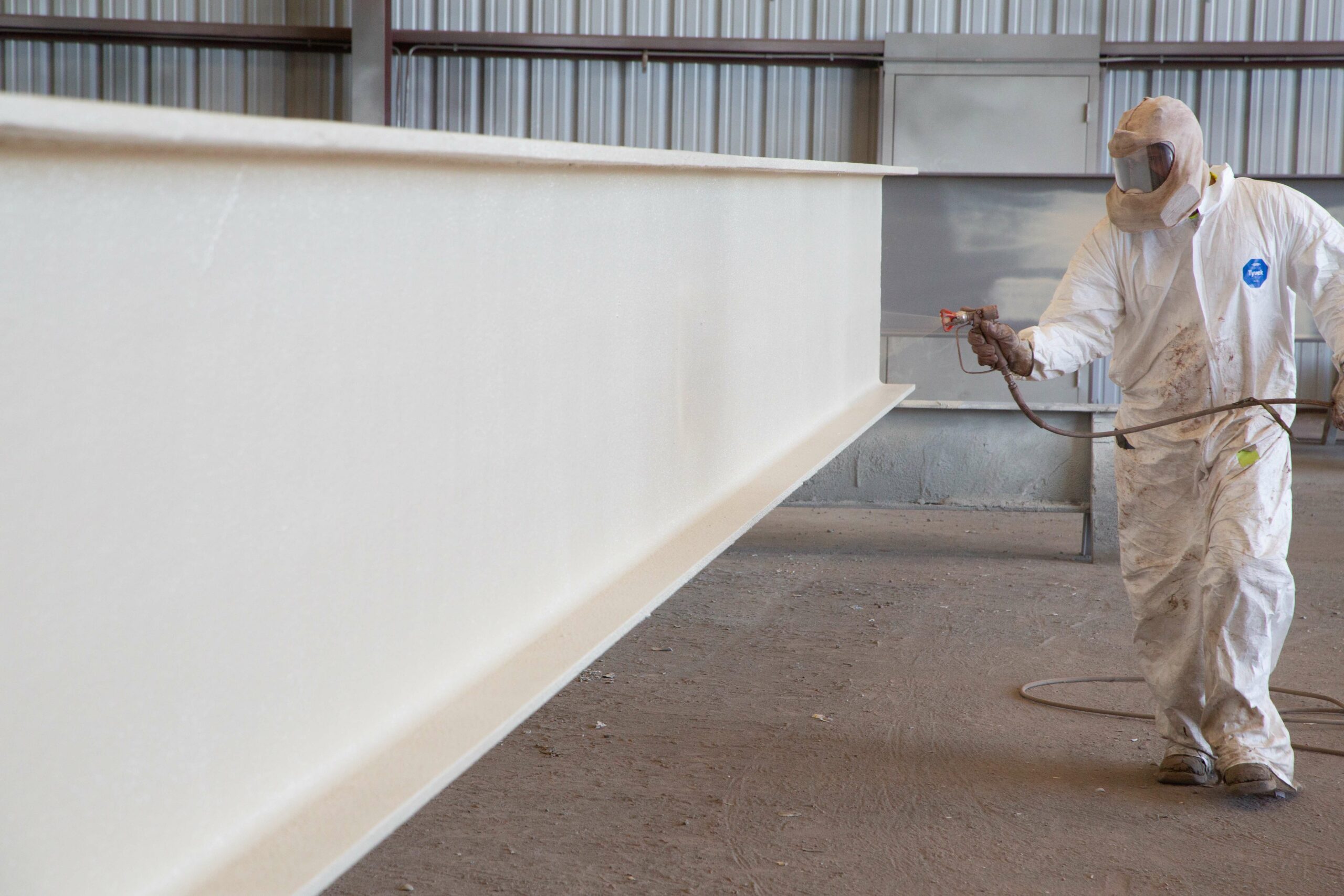
Fire safety depends on how coatings perform under actual structural loads, restraint conditions and thermal exposure. Proper testing accounts for beams, columns, floor assemblies and defined load conditions. A coating applied to an unloaded and unrestrained column does not represent performance on a roof truss supporting lighting rigs, scoreboards and HVAC systems.
Third-party testing under UL 263 and ASTM E119 simulates full structural configurations. These standards examine how primers, intumescent layers and topcoats interact during fire exposure. They define the dry film thickness or DFT required to achieve 30-, 60-, 90-or 120-minute ratings. These parameters are clearly documented and not left to interpretation.
Advanced regional codes such as SBC 801 and the United Arab Emirates Fire and Life Safety Code increasingly expect this level of system-based evaluation. Developers, owners and contractors should demand it as well.
Understanding the Real Differences Between Fire Testing Standards
UL 263 and ASTM E119 are designed to simulate realistic structural fire conditions. They apply defined loads and evaluate failure based on insulation performance and structural integrity under stress.
By comparison, BS 476 Parts 20 and 21 focus on controlled laboratory conditions and do not assess the performance of complete systems under realistic restraint or environmental exposure.
A critical difference proves durability testing. BS 476 does not evaluate how fire protection materials perform after exposure to humidity, temperature cycling or mechanical wear. UL 263, supported by UL 2431 methodologies, includes durability assessments that reflect long-term performance in real environments.
Products certified under UL and ASTM are typically subject to third-party factory audits, listing programs and ongoing compliance reviews. While BS 476 listings may be supported by certification schemes such as Certifire or inclusion in the Red Book, the standard itself does not mandate system-level verification or environmental conditioning of assemblies.
Some argue that BS 476 tests more individual steel sections than UL or ASTM. The number of specimens alone does not determine reliability. UL and ASTM standards use defined thresholds for load, temperature and time, resulting in more consistent and repeatable outcomes.
Without consistent benchmarks and durability criteria, systems that pass under one method may not perform equivalently under another. This can create confusion in specifications, delays in approvals or unexpected performance issues. Specifiers and asset owners must understand how a system was tested and under what conditions to make informed decisions.
Durability Matters
Stadiums in the Middle East face extreme environmental exposure. High temperatures, dust, humidity and ultraviolet radiation place sustained stress on protective systems. Fire resistance is not enough. Advanced coatings must maintain integrity over time without cracking, delaminating or degrading.
Standards such as UL 2431 evaluate environmental durability through simulated ageing, weathering and thermal cycling. This type of testing helps confirm that a fire protection system will perform throughout the structure’s life.
Durability becomes even more critical in modular and prefabricated construction. Steel components coated off-site may face transportation, handling and delayed installation. Premature damage can compromise fire performance before the venue even opens. Owners and engineers must therefore select systems with proven resistance to climate, time and mechanical stress, not simply those that meet a minimum fire rating under ideal conditions.
In the Field: Global Stadium Projects
Wembley National Stadium Limited required a long-lasting fire and anticorrosive protective coating system for the reconstruction of Wembley Stadium in London. The project demanded a solution capable of coating every shape and size of steel used throughout the structure while meeting fire protection standards and delivering a high-quality aesthetic finish.
Over the five-year reconstruction period, the challenge was to protect this complex, highly visible steelwork with a durable, low-thickness system that provided both fire resistance and long-term corrosion protection. The solution included the application of PPG STEELGUARD solvent-based intumescent coating to achieve a 60-minute fire rating, combined with PPG SIGMACOVER coatings to protect internal and external steel. The completed system provided robust anticorrosive performance, compliant fire protection and an excellent visual finish across the intricate steel structure, supporting the stadium’s long-term durability and iconic appearance.
The Las Vegas Raiders required a coatings solution for Allegiant Stadium in Las Vegas, Nevada, USA, that would reflect the venue’s bold black and silver identity while delivering long-term protection under demanding timelines. The team selected PPG AMERCOAT 68 HS and PPG PSX 700 coatings for protection.
The three-component zinc-rich epoxy primer provided excellent corrosion protection for carbon steel substrates and allowed for rapid top coating, supporting fast turnaround during construction. To achieve the signature “Black Gold” and “Silver Fox” finishes, the advanced coatings were applied to both exposed and unexposed structural steel, providing extended resistance to ultraviolet exposure. The coating offers ease of application, high adhesion and corrosion resistance, and long-term gloss and color retention, serving as an effective alternative to traditional three-coat systems. The result? The owners received a sleek, high-impact stadium exterior protected by a durable coating system that reinforces Allegiant Stadium’s status as a standout landmark on the Las Vegas Strip.
The ANZ Stadium in Sydney, Australia, was completed in 1999 to host the Summer Olympics and has since become the home stadium for the Canterbury-Bankstown Bulldogs, South Sydney Rabbitohs, Wests Tigers and many others. The east and west roofs of the stadium were erected before the Sydney Olympics and coated with a three-coat polyurethane system. During the reconfiguration, the north and south roofs were added and coated with the two-coat epoxy polysiloxane system: PPG AMERCOAT 307 zinc-rich primer and PPG PSX 700 siloxane topcoat. The repaint was part of a roof refurbishment program for all structural steel exteriors, which also included replacing all clear and translucent polycarbonate roof panels. Overall, the durable protective coating enabled easy, efficient application to preserve the stadium’s impressive image, elevate its user experience and reduce maintenance costs.
What’s Ahead
These Middle East projects require the highest level of fire safety to protect people, preserve investments and reputations. Global fire testing standards reflect the future of fire protection. They bring clarity, consistency and a higher bar for performance. When project teams specify coatings that pass full system testing under the most rigorous standards and conditions, they reduce risk and increase confidence.

By Barry Allan, PPG Global Key Account Manager, Infrastructure, Protective and Marine Coatings
Barry Allan is a Global Key Account Manager, Infrastructure for PPG’s Protective and Marine Coatings business. He works with customers across the Middle East to help them align coating specifications with local and international fire codes. For deeper insights, download PPG’s whitepaper “Understanding Fire Testing Practices for Cellulosic Passive Fire Protection Systems” here.
SVB LIVE provides an unrivalled, global community, with opportunities to network, collaborate and explore new possibilities year-round via the SVB LIVE Business Club.

Check out the latest sports & entertainment venue development data from across the globe in the exclusive, subscription-only, SVB Global Report here.
#SportsVenueBusiness – The leading global platform for sector news, views & developments
#SVBLIVE – The leading global series of events for the live experience industry