- March 12, 2026
- Posted by: SportsV
- Categories: Case Studies, Featured Articles, Features, Home News, Industry News, News, Press Releases
The year 2026 will be a big one for stadiums and arenas — with an Olympics, a FIFA World Cup, and sports teams globally completing or embarking on high-profile construction projects. As these events generate buzz and anticipation, they also highlight a complex design and business reality: In order to succeed, today’s venues must be highly specialised yet flexible enough to accommodate a wide range range of activities and even multiple sports.
And this reality raises tricky questions: Can stadiums and arenas created for a particular sport effectively adapt for other uses? What factors determine whether it’s better to renovate and modernise, or build new? The global stadium design experts at gmp Architects — including associate partner Tobias Keyl and director Martin Glass — contend they have solid answers.
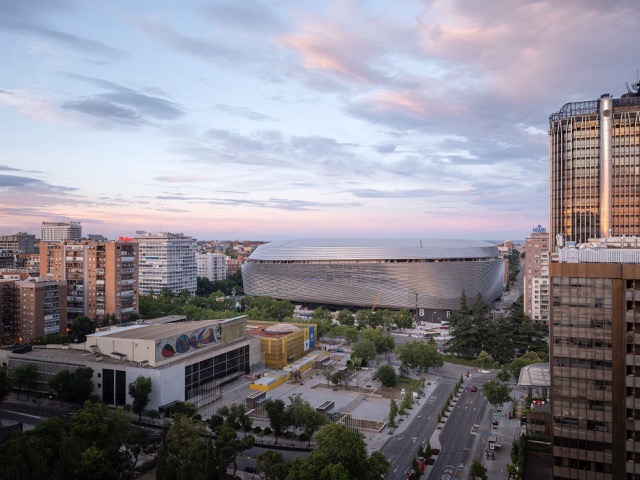
Among the world’s most influential designers of stadiums and multipurpose arenas, Glass, Keyl and their team at gmp have designed FIFA World Cup facilities in Germany, South Africa and Brazil. They hit the headlines for the recent dramatic revamp of Real Madrid’s Santiago Bernabéu Stadium (pictured top), the ongoing modernisation of Montreal’s Olympic Stadium, and the creation of the 130-acre mixed-use Wuxi Olympic Sports Center in China.
All of these venues, whether renovated or entirely new, share a focus on adaptability and design that accommodates different uses, helping to future-proof while boosting attendance and revenue today. (At Bernabéu, for example, Taylor Swift kicked off an unprecedented series of concerts with sold-out audiences.) Additional detail on these adaptable, multiple-use projects, and the best practices behind them, follows below.
The 2026 SVB LIVE Conference & Exhibition – with a focus on elevating the live experience through pillars including Architecture & Design, Fit-Out & Interiors and Premium Experience – is being hosted at Everton’s spectacular Hill Dickinson Stadium, October 1st and 2nd, with an Opening Night Icebreaker at Liverpool FC’s iconic Anfield on September 30th.
Multifunctionality Boosts Longevity
gmp’s Keyl, said:
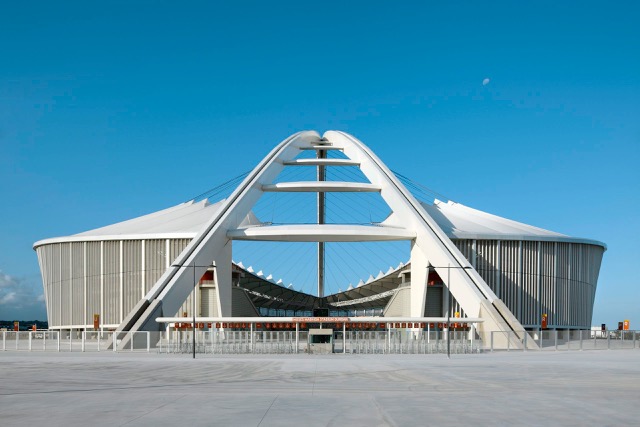
“In our experience, designing for multipurpose use has proven fundamental to the longevity of a new stadium or arena facility. Since the 2010 FIFA World Cup, for example, sports have accounted for only 25% of revenue at South Africa’s Moses Mabhida Stadium. Conferences, concerts and leisure activities generate the remaining 75%. Being able to accommodate a range of uses from the start prevents a stadium from becoming obsolete within a relatively short timescale, which has been a significant issue for many 20th-century stadiums and arenas in North America.”
Similarly, the gmp director Martin Glass points to multipurpose upgrades as a critical factor behind the viability of major renovation initiatives such as the award-winning Bernabéu Stadium project, which leverages a new retractable roof and lawn pitch to enable a range of all-weather events, including concerts and even other professional sports matches beyond soccer.
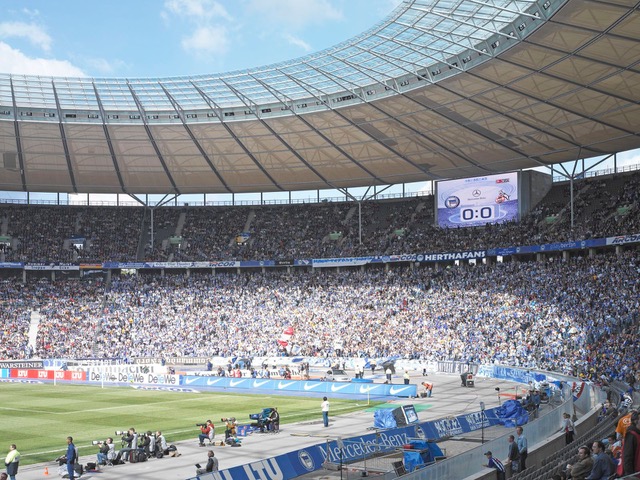
In fact, both the Bernabéu venue and gmp’s reconstructed Berlin Olympic Stadium have hosted NFL football games in 2025, driving valuable off-season revenue and supporting their long-term status as leading regional gathering hubs. gmp’s work on the 1970s-era Montreal Olympic Stadium follows the same strategy, integrating a more durable roof with modern event technology and significant acoustic improvements to facilitate year-round attractions.
Keyl noted:
“These flexible design approaches are especially valuable when there are external factors driving a venue’s preservation. Landmarking or public sentiment, alongside clear environmental imperatives for embodied carbon reduction can in some cases make it effectively mandatory to retain an existing stadium or arena, and designing adaptability into a renovation prevents that structure from becoming a stranded asset.”
To Maximise Stadium Impact, Create Mixed-Use Districts
For sports teams and development groups committed to building a new stadium or arena, multifunctional design should address a larger scale, according to gmp’s experts Keyl and Glass. That means leveraging opportunities for additional mixed-use growth that can help integrate the venue into a broader development fabric.
Glass said:
“In order to succeed in the long term, thoughtful planning is key. New stadium developments — especially those outside of core urban centres — must carefully consider transport, access and proximity to services. We’re seeing a number of U.S. sports teams adopt this strategy and put forward visions for mixed-use entertainment districts, which is a useful step away from previous models of an isolated, single-use facility that can quickly become obsolete.”
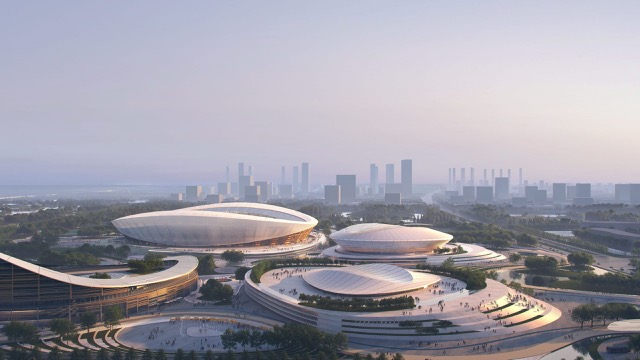
The architects at gmp also point to emerging case studies from Asia, including the firm’s ongoing work for the Wuxi Olympic Sports Center just west of Shanghai. This project includes a stadium for 60,000 spectators, a multipurpose arena with a capacity of 18,000, and a competition pool with 2,000 spectator seats. All of these elements are embedded in a 140-acre, storm-resilient landscaped park that also accommodates a new fitness centre, a hotel, an apartment building, and commercial facilities — ensuring this district can host the widest possible array of events and gatherings, while serving as a central hub for future development in the area.
Its work shown widely, gmp has been included as part of major recent stadium exhibitions at the MAXXI Museum in Rome and the Royal Institute of British Architects’ RIBA North cultural centre in the U.K. The firm also ended 2025 with a prestigious Stadium Business Design & Development Award as an industry partner that has consistently designed and delivered outstanding venues across several decades.
Main image (top): Santiago Bernabéu Stadium
Source & imagery, courtesy of gmp
SVB LIVE provides an unrivalled, global community, with opportunities to network, collaborate and explore new possibilities year-round via the SVB LIVE Business Club.

Check out the latest sports & entertainment venue development data from across the globe in the exclusive, subscription-only, SVB Global Report here.