- April 10, 2026
- Posted by: SportsV
- Categories: Featured Articles, Features, Home News, Industry News, Interviews, News, Press Releases
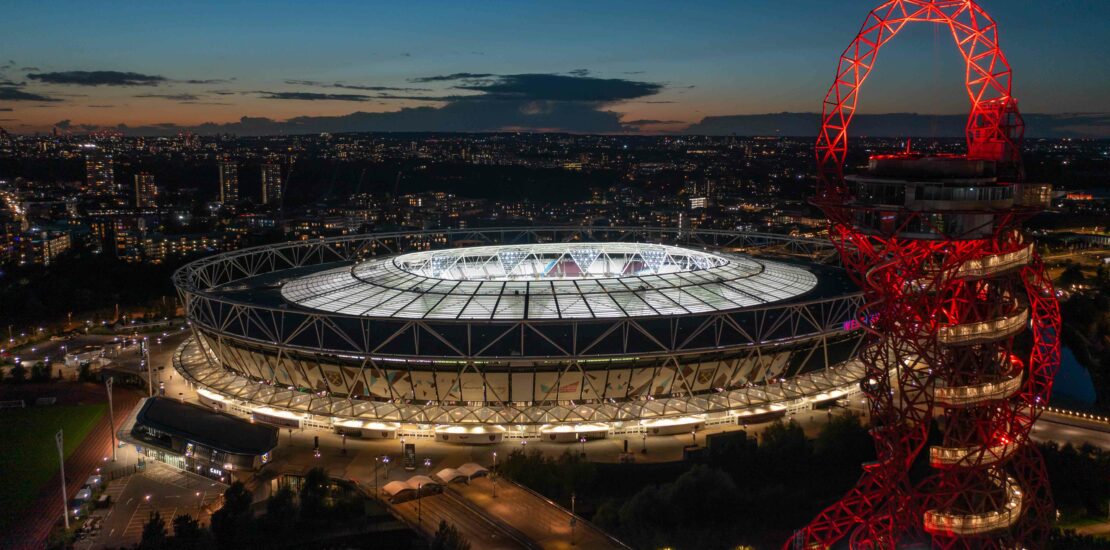
In this recent interview, Graham Gilmore, CEO of London Stadium, discussed the venues unique features, including exceptional acoustics and the largest floor capacity in the UK, capable of hosting up to 35,000 people. The stadium has hosted diverse events, from concerts by The Rolling Stones and Burna Boy, to World Athletics and the Rugby World Cup. Gilmore highlighted the stadium’s ambition to enhance its role as a 365-day entertainment destination.
Katie McIntyre: London Stadium is synonymous with the London 2012 Olympics, West Ham United and UK Athletics, but as we know, there’s also a whole host of other events going on at the venue So, what is it that attracts event owners to the London Stadium?
Graham Gilmore, CEO, London Stadium:
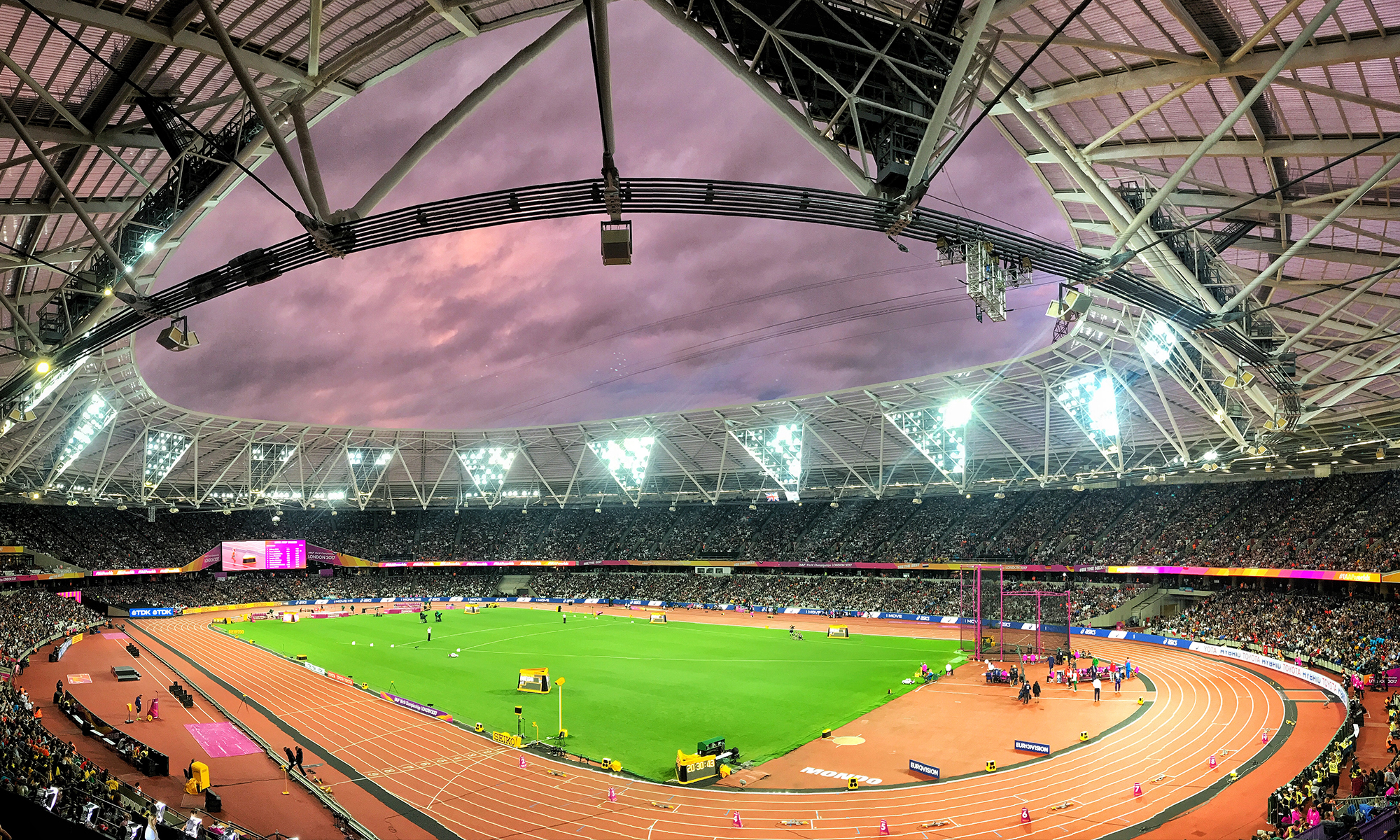
“There are so many reasons that event owners want to come to London Stadium, but I think one of the main reasons is we found out very early on that the acoustics in the stadium are incredible, because it’s a shallow bowl and the roof comes back over the seating area. A band can come perform and hit DB levels that they can’t hit anywhere else without affecting levels at the critical assessment points outside the venue. Obviously, we’re restricted on how far we can go, and we have to stay under certain DB levels, but if we average out, the actual sound quality is something that is unbelievable here.
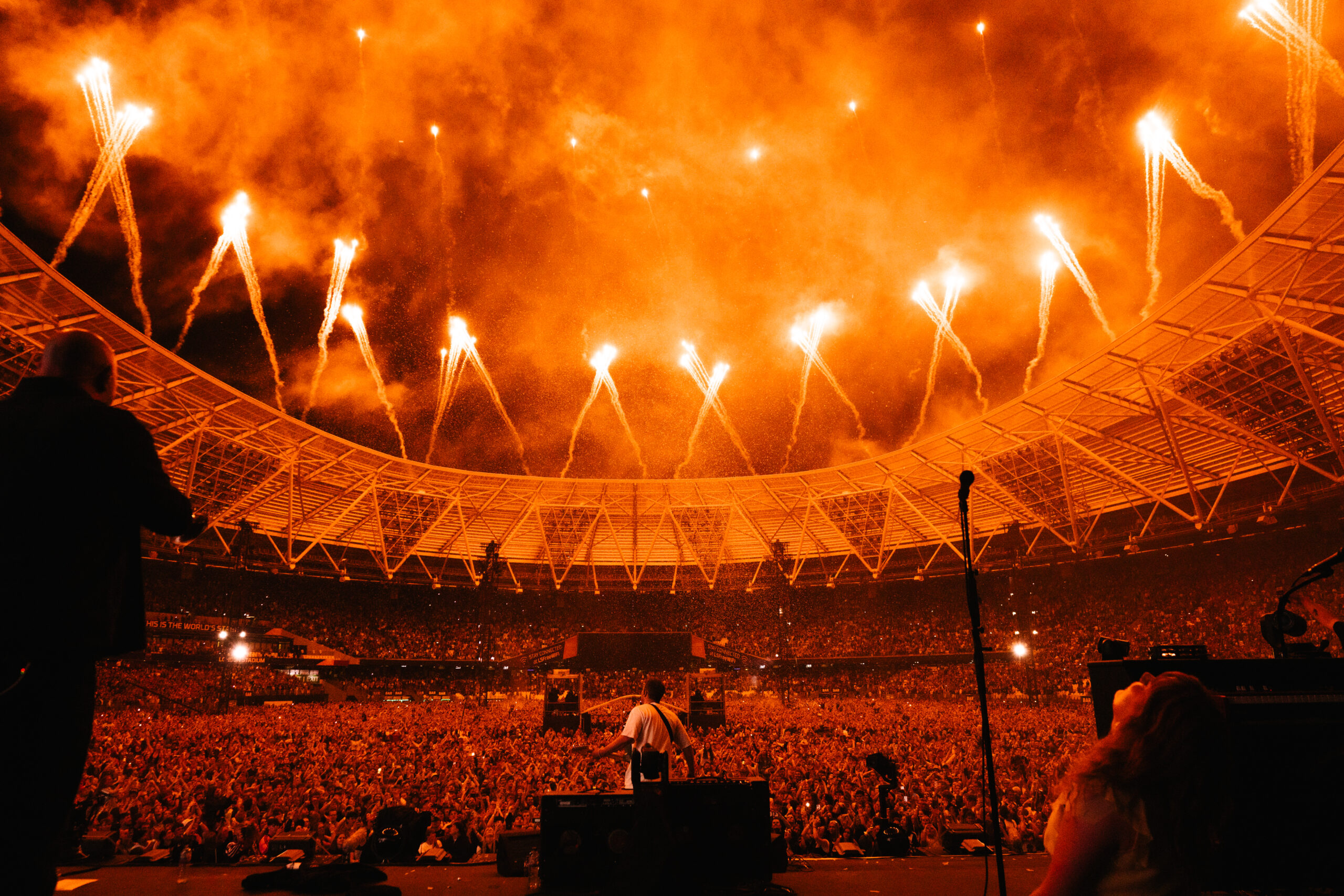
“Also, a really unique USP is that we boast one of the largest floor capacities (35,000 – 40,000) in the country. It’s on a par with the Stade de France, and is probably the biggest standing Arena in Europe. When I’ve been speaking to promoters and artists, they actually say that when they walk out on stage at the London Stadium, it’s as if they’re playing a festival, because all you see is a sea of people.
“The layout of the rigging and the delay towers means we can fill the back part of the bowl. Just recently, we had Sam Fender (79,999), who sold more tickets than any other artist and is the highest ever attendance at London Stadium. He played with a flat, real, traditional rock and roll stage, so the floor looked absolutely incredible and when Olivia Dean came out with him and she was absolutely spellbound by the amount of people.
“Between the sound and the floor capacity that we’ve got, as well as the outside space, we can provide a complete festival vibe because we’re on an island. We have the five bridges coming across. So, we shut down the whole of the island and put the turnstiles on the end of the bridges. So therefore you don’t walk over, go through a turnstile and go to your seat or go to the standing area, you actually walk over and go, “Oh, hang on a second there’s a whole festival vibe going on here”, and all the exits are open, and you free flow backwards and forwards. So that’s one of the absolute unique assets of London Stadium. I think that really helps us, especially when you get the big rock bands, who love being as loud as they possibly can, and love the amount of people that they can see in front of them.”
The 2026 SVB LIVE Conference & Exhibition – with a focus on elevating the live experience through pillars including Venue Commercialisation and the Customer Journey – is being hosted at Everton’s spectacular Hill Dickinson Stadium, October 1st and 2nd, with an Opening Night Icebreaker at Liverpool FC’s iconic Anfield Stadium on September 30th.
KM: You have Metallica coming to London Stadium, you’ve hosted The Weeknd, and are home to West Ham and UK Athletics. How do you go about attracting those huge, global events and acts?
Graham Gilmore, CEO, London Stadium:
“Metallica will play a sold out concert of 80,000 people, across two separate nights, and it will be the first time ever that the London Stadium will do a concert in the round, which is fantastic for us as a venue, because you then get to utilise all the seating deck and all of the floor. They are going to be building quite a big floor plan for the stage and areas of semi stages coming off it, so it will be an unbelievable spectacle.
“Seeing Sam Fender on a straight rock and roll stage with his guitar pumping out hit after hit after hit was an incredible atmosphere. So then come back this summer to have Metallica in the round and be the first artist ever to play in the round at London Stadium, since it’s reopened, is going to be an incredible sight to see. Obviously, before that, we have Take That bringing the Circus Tour back; all the animatronics and the unicyclists and all the jugglers, everything, that is going to be an amazing event.
“Obviously you know that the Foo Fighters’ David Grohl loves playing here. There’s a famous clip of him saying how much he loved playing our stadium saying “this is where the real sh*t happens, right here. This is Rock and roll”.
“Burna Boy was the first ever Afrobeat artist to play London Stadium; it was his first stadium gig, the first headline stadium gig by any African artist. I went with his promoter and his family, and we sat and discussed it. He’s the first artist to come to the venue months before the gig to sample the atmosphere, look at the stadium, etc. And then the night of the concert I said to him, “You made history tonight” and he replied, ”We made history tonight”, and then he came back and did another fantastic, sold out show the following year. He has gone on from success to success, around the world, even playing the Champions League final. Seeing him on the Mall with the Lionesses when they won the Euro’s and he came out with Sarina Wiegman, who is a massive Burna Boy fan, which if I had known, I would have brought her to his gigs at our stadium!”

Gilmore continued:
“As for availability, we only have a very small window. Once the football season finishes, we have to retract and reconfigure the seating into a bowl, which is a significant operational challenge. We identified early on that the post-Olympics design wasn’t enabling us to move the seats quickly enough and was also extremely costly.
“During Covid, we took a proposal to our board, working with our seating structure partners, to redesign the stands. The result was a lighter, more efficient frame that’s easier and faster to move and store. Where the process used to take 14 to 15 days, it now takes seven days or fewer, which has opened up valuable additional windows to programme more events.
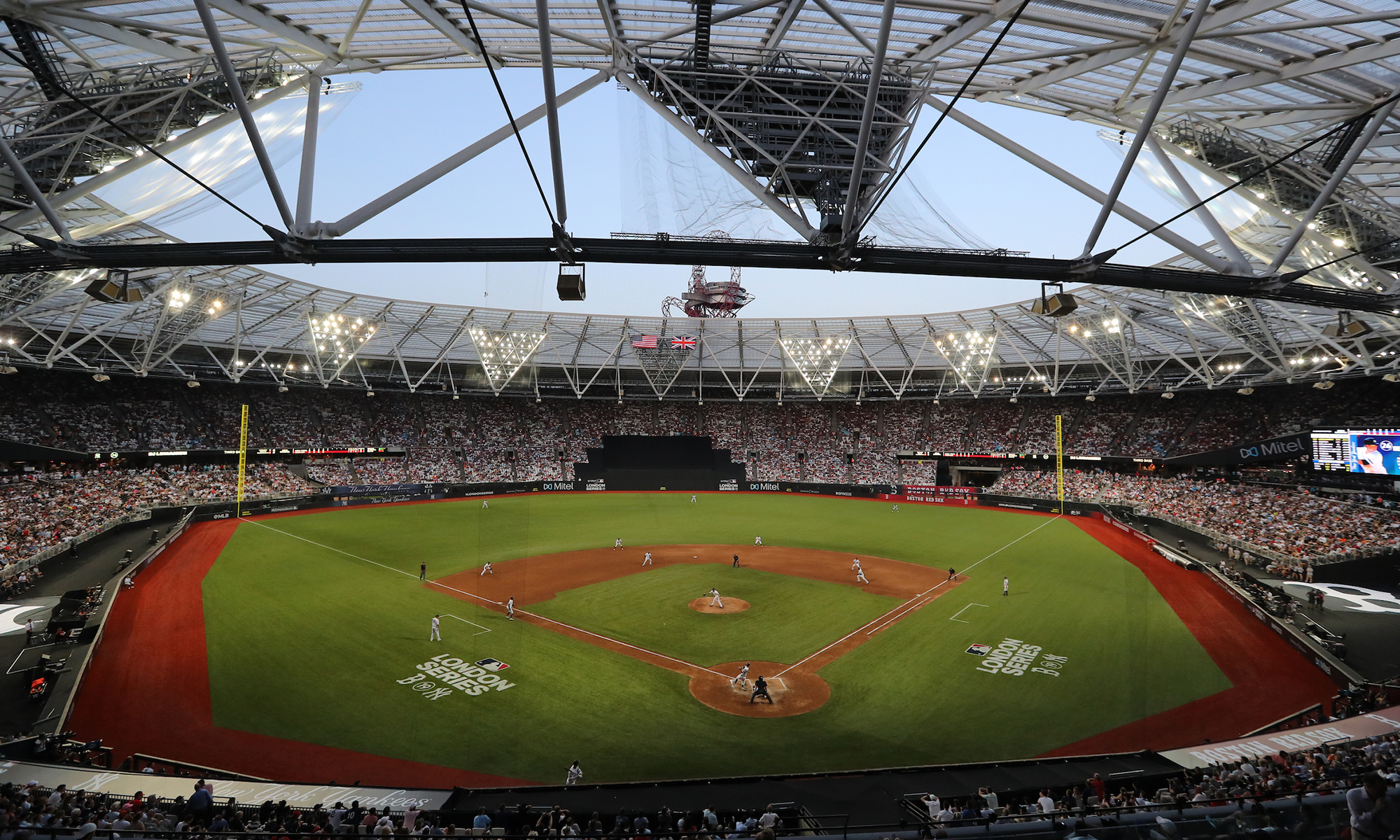
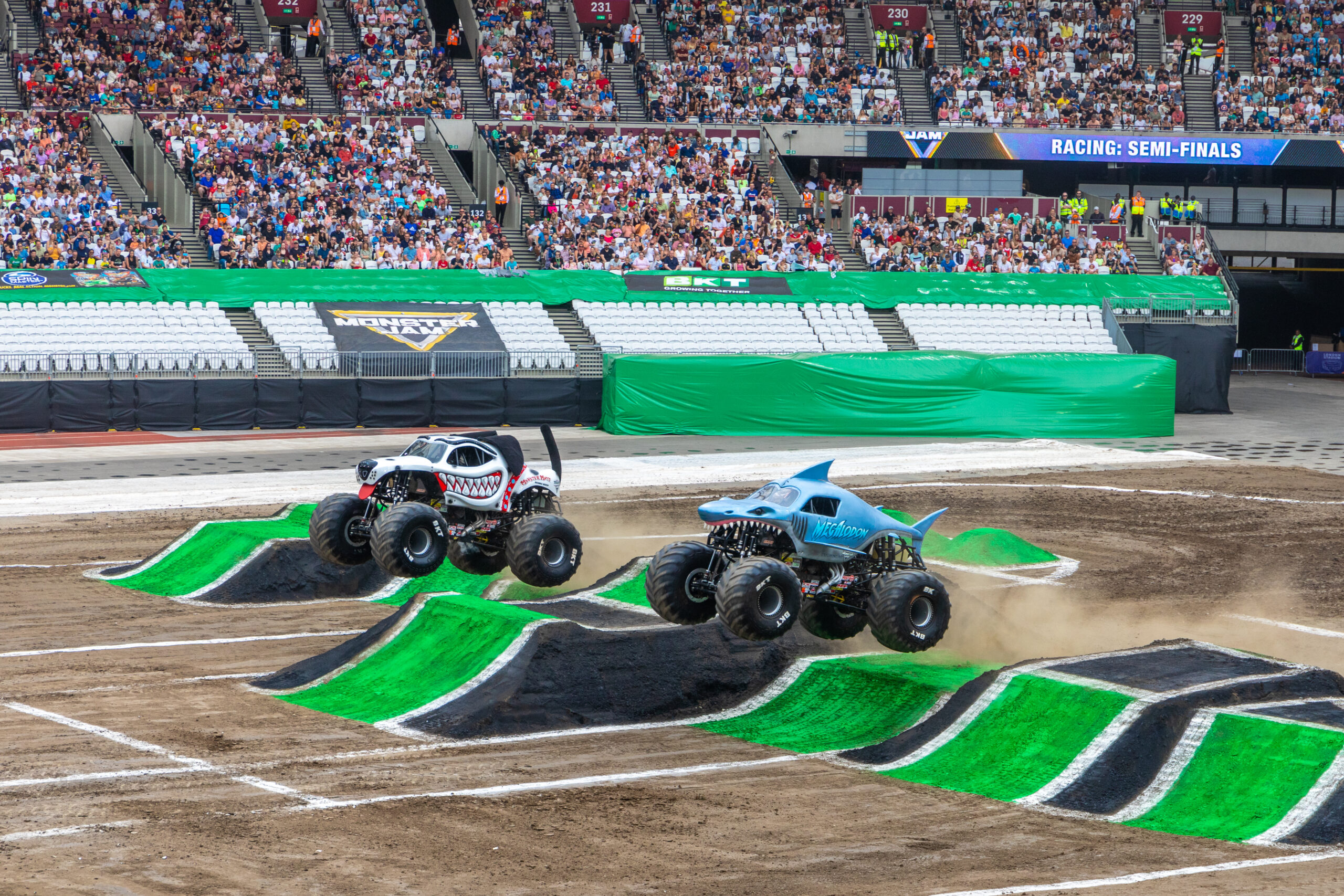
“Back in 2024, we went from Premier League football straight into Major League Baseball, which we made a ballpark and a diamond for baseball. We went from baseball into several concerts. We then went from concerts into Monster Jam (monster trucks) with tons and tons of dirt and cyclists and trucks flying all over and doing acrobatics. Then we went into Diamond League athletics, which is the biggest diamond league event in their calendar and best attended single day of athletics anywhere in the world. Then we went back into Premier League football, all in the space of around seven weeks. No stadium in the world has ever done that! It was an incredible piece of work that was done by my team here, my operations team, my security team, and then the transition teams of our partners that we use. I don’t claim it’s the only venue in the world to ever do that, but no one’s ever challenged me.
“The variety of entertainment that we brought in really showed that the London Stadium is a multi-use venue, worthy of our strapline “The world’s stage”. I think the biggest nightmare for my Operations Director, Darren Raczkowski, is when I’ve said I’m just going off to a meeting, and I walk back, and he just looks at me, and you can see by the look on my face that he knows I am going to put something on that we’ve never done before. He’s an incredibly talented guy that runs an incredibly talented operations team that I couldn’t be prouder of.”
KM: Can you give us an insight into the process from contract to delivery?
Graham Gilmore, CEO, London Stadium:
“At the outset of a tour, discussions typically take place at management and agent level, often well before they reach us as a venue. Agents determine which artists are touring and will then approach promoters to represent those artists. Promoters submit their commercial offers and propose routing, whether that’s for a European or global tour.
“This is where competition between venues becomes more pronounced. Some venues have greater flexibility than others, which can make a significant difference. For example, Tottenham Hotspur Stadium benefits from having an astro pitch beneath the grass, allowing them to remove the pitch and host more events during the football season. However, they cannot achieve the same capacities that we can. Wembley, on the other hand, does not have a resident football team, which gives them a much larger events window. As a result, the competitive landscape in London is stronger than ever.
“Once the promoter has finalised the deal with the artist and confirmed the routing, they will assess availability in London and approach the venues. They will come to us with a request, we share our availability, and artists are pencilled into the diary. These pencilled bookings are prioritised — first pencil, second pencil, third pencil, and so on. Being first pencil puts an artist in a very strong position. However, if a second or third pencil comes in with a particularly strong act, the promoter may ask to activate a challenge process.
“If that happens, we formally challenge the number one pencil. If the first pencil does not pay the required deposit within the agreed timeframe, their hold falls away and the challenging artist moves into first position. Once an act becomes first pencil, we begin detailed negotiations around the deal, including venue hire, rental costs, timing, event specifics, additional services, doors and gates. This leads to contract stage, after which we sign and, ideally, move towards an on‑sale.
“We have excellent relationships with all promoters, but it remains a highly competitive market. Tottenham, Wembley and Emirates Stadium are all doing exceptional work. We try to collaborate where possible, but ultimately we are competing for the strongest content. Once the contract is secured and the show goes on sale, the focus shifts to delivery: the build‑up, production meetings and operational planning.”
Gilmore continued:
“When we reach event week, the tour promoter and touring security teams arrive on site. They focus on artist movements, arrivals, departures and stage access, working closely with our local security and operations teams. From there, everything comes together — and once the curtain goes up, the lights come on, and the show begins.”
KM: Is it difficult to build in flexibility when you’ve potentially got to turn the venue around from West Ham games, to Monster Trucks, to an MLB game, etc?
Graham Gilmore, CEO, London Stadium:
“I think the way we do it here is we will obviously always side on concerts, because there’s decent revenue for both the promoter and the venue. Baseball adds to the breadth of events here at London Stadium and adds £60m+ to the local economy for every weekend they are here. So, baseball is not only important to us because of the spectacle, because of it being a world sport and of huge economic benefit to London and the UK. You know, it’s an incredible American sport that’s followed by many, many people, and it’s great to bring an actual competitive game out of their league season to London, so the London fans can see it. It is also extremely important for the GLA to be embracing all kinds of sport like they do with NFL and NBA basketball and everything else, but to have baseball here is brilliant for us. The only challenge there is the amount of time it takes, as it involves a couple of weeks to set up a game week and then a breakdown week. So, in all, it takes four weeks out of the calendar, minimum. But it’s a strong commercial deal for us, but more so it’s a fantastic thing for London, and it’s a brilliant thing for the Mayor of London to be able to bring in.
“I’d like to have a concert across every single available weekend, and then events such as monster trucks if we can fit them in; and I’ve got to say Monster Jam are probably one of the most professional entities I’ve ever had the pleasure to work with. They come in with over 200 tonnes of dirt, in hundreds and hundreds of trucks, put on an amazing family show and then they’re gone. If they put a show on a Saturday afternoon, they’re gone by Sunday lunchtime. I come in on Monday morning, and I can’t even tell they’ve been here. It is a pleasure to work with Feld Entertainment, an incredible organisation.
“UK Athletics and World Athletics are obviously very important events to the stadium, because of the Olympic legacy and what the venue was originally built for in 2012; a blueprint for Olympic Park transformations and venues still in use today. It’s the most successful legacy that’s been left by a capital city or a city that’s hosted the Olympics, and it’s important that we still carry that on. Our first event back in the stadium was the Anniversary Games with 55,000 people in 2015. We then did the world Athletics Championships in 2017, the biggest audience ever, globally for World Athletics Championships. We’ve now grown again, and the Diamond League event has become incredible, growing each year.”
KM: Obviously you mentioned the GLA and the Mayor of London, and London Stadium is publicly owned. So it must be very important to have open communications with the mayor and the GLA like, how does that work?
Graham Gilmore, CEO, London Stadium:
“We’ve recently changed the way we work. In April last year, London Stadium 185 became the sole operator of London Stadium, reporting directly into GLA and the Mayor, Sadiq Khan, where we used to report into an organisation called E20 that was set up for the reopening of the London Stadium, that went into the London legacy Development Corporation (LLDC).
“LLDC now have no responsibility for the stadium. I’m grateful that the Mayor decided that he likes London Stadium 185 as the company to run the venue, of which I am Chief Executive. He liked what we’ve done, and he likes the direction of travel that we were going in, and we’ve always had great communication with the Mayor and his Chief of Staff, David Bellamy, and the team. Sadiq has said what a great asset London Stadium is for London and I could not agree more, we sit at the heart of Queen Elizabeth Olympic Park but also as a hugely important venue for the people of London.”
KM: What are your ambitions for the venue and the sort of events that you would like to attract at London Stadium over the next couple of years.
Graham Gilmore, CEO, London Stadium:
“I touched on boxing as one thing the London Stadium hasn’t hosted yet, but I’m confident it will happen during my time here. The transformation of the Olympic Park since 2012 has been extraordinary. The regeneration, the new buildings, the infrastructure and especially the transport links into Stratford, now even better with the Elizabeth Line, make this an incredible destination that continues to grow.
“The challenge, and the opportunity, is how we take it further. How do we bring in new events, festivals and experiences that extend beyond what happens inside the stadium? How do we activate the wider area such as the bridges, canals, surrounding roads and even one of Europe’s largest shopping centres right on our doorstep, and turn it into something truly cohesive?
“You come to Stratford, you visit Westfield, cross the road past offices, hotels and apartments, move through the Aquatics Centre, one of the park’s most iconic buildings, and then reach the jewel in the crown: London Stadium. The question is, how do we make all of that feel like one connected, vibrant destination? Not just a venue for summer concerts, but a place that comes alive 365 days a year.
“That’s where my vision sits, creating a destination people actively want to come to, stay in and enjoy. There’s nothing better than arriving on a sunny Saturday before a Premier League match and seeing families, kids and young adults everywhere: cycling, running, playing football and tennis. That sense of life and energy is the true legacy of the Olympics here.
“I want to build on that. Take it another step, or three! Invest in the area, create unforgettable entertainment, facilities and leisure experiences, and make Stratford, London Stadium and the Queen Elizabeth Olympic Park a place where people come simply to have a great time and enjoy everything it has to offer.”
Part II of this interview with Graham Gilmore, CEO, London Stadium, to follow.
Images, courtesy of London Stadium
SVB LIVE provides an unrivalled, global community, with opportunities to network, collaborate and explore new possibilities year-round via the SVB LIVE Business Club.

Check out the latest sports & entertainment venue development data from across the globe in the exclusive, subscription-only, SVB Global Report here.