- June 16, 2026
- Posted by: SVB
- Categories: Featured Articles, Features, Home News, Industry News, Learning, News, Seating & Staging
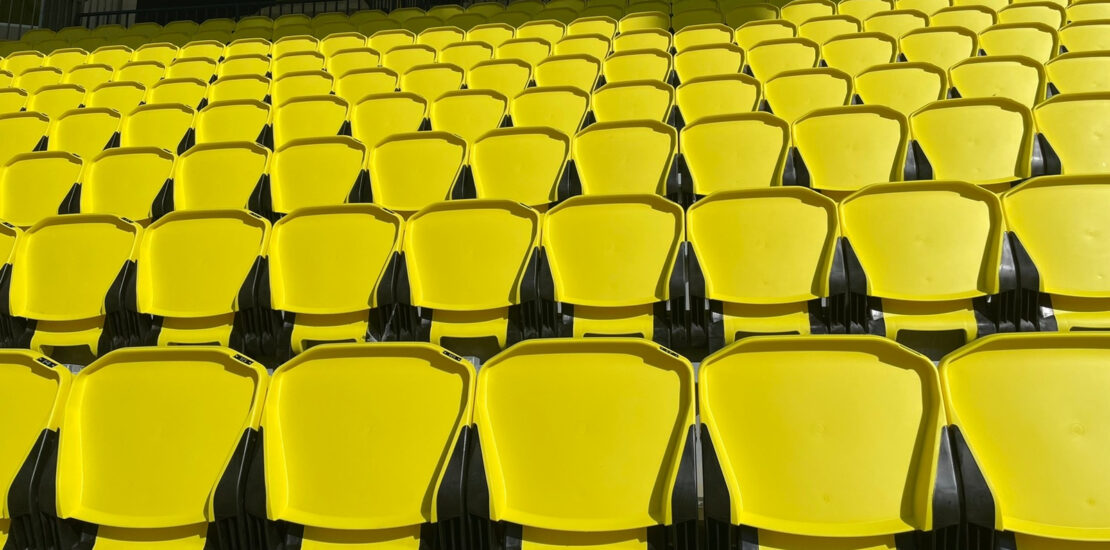
When defining the technical specifications for an outdoor stadium or sports venue—whether from the design desk of an architectural practice, the standards‑driven calculations of an engineering consultancy, or the feasibility assessment carried out by the contractor and the asset owner—UV resistance is a critical variable to ensure long‑term project success.
The question “Does it have UV protection?” is no longer enough. What is really required is verifiable evidence: how it is demonstrated, which standard supports it, and what impact it has on service life, colour, safety (brittleness/impact) and replacement cost.
It is also important to differentiate between two concepts that are often confused:
- Aesthetic resistance: that the seat does not fade, or that it fades slowly and uniformly
- Structural resistance: that the material does not degrade, does not become brittle and retains its mechanical properties over time.
Below Daplast answers, directly, the questions that most frequently arise when technical teams assess outdoor seating, and we share key points to safeguard quality through design, engineering calculations and life‑cycle planning.
Key takeaways:
- Key standard: the project reference is UNE‑EN 13200‑4 (2,300 h accelerated ageing test + mechanical and colour assessment).
- “Real” UV protection: stabilisation must be integrated through the material (in‑mass), not as a surface coating.
- It’s not only aesthetic: UV radiation can affect mechanical safety (brittleness/impact), not just colour.
What factors influence a seat’s UV resistance?
Three key factors determine performance against UV radiation:
- Pigment quality (masterbatch): commonly assessed using lightfastness methods such as EN ISO 105‑B02, used as a benchmark for comparing pigments.
- Use of UV‑stabilising additives: essential when the seat is installed outdoors. Their function is to slow down material degradation and colour loss, supporting gradual and uniform ageing.
- Manufacturing process: moulding with poorly controlled parameters can degrade additives before the seat even reaches the installation site, affecting its real in‑service performance.
The 2026 SVB LIVE Conference & Exhibition – focused on elevating the live experience – is being hosted at Everton FC’s spectacular new Hill Dickinson Stadium on October 1st and 2nd, with an Opening Night Icebreaker at Liverpool FC’s iconic Anfield Stadium on September 30th.
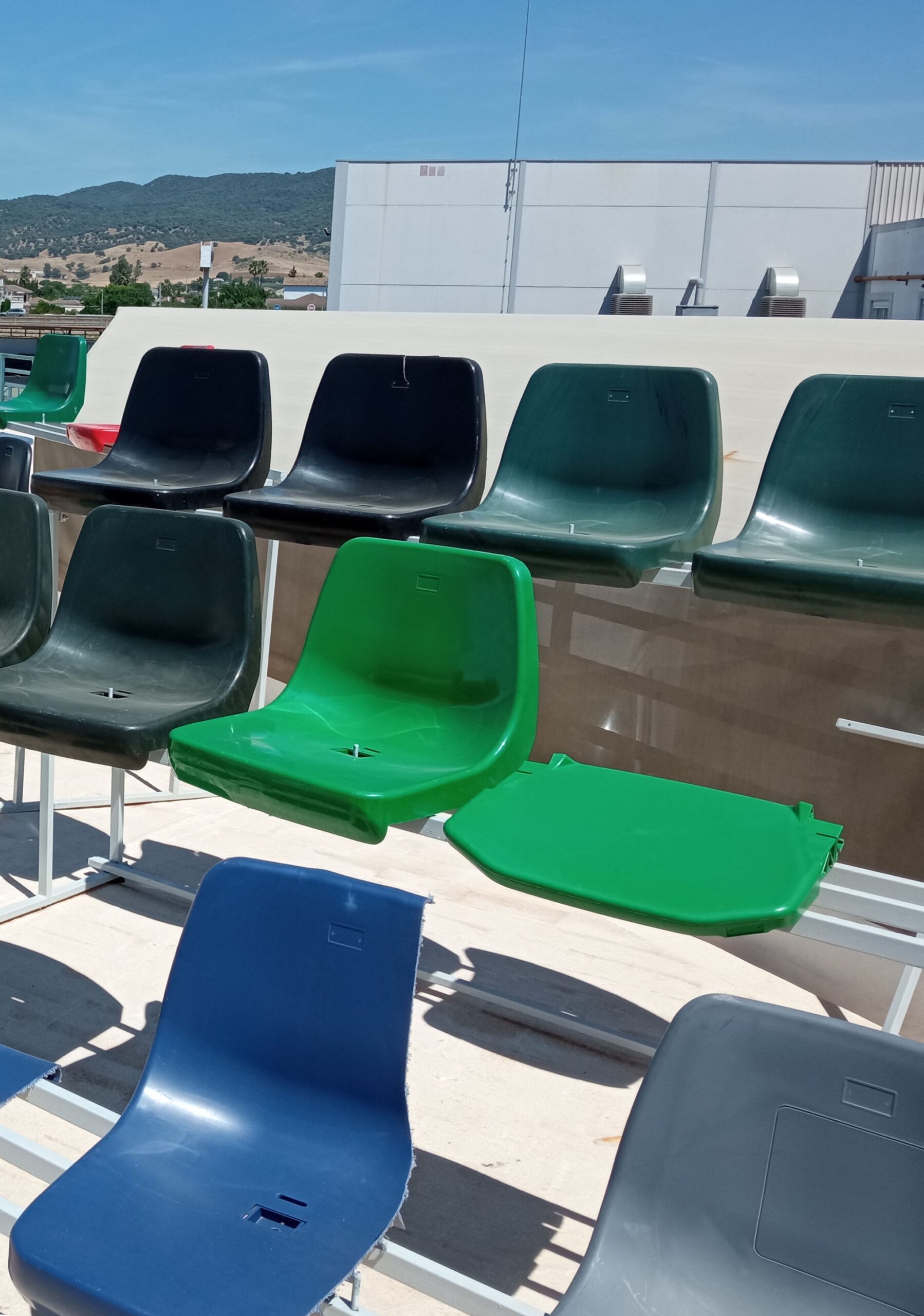
Is the UV stabiliser “in‑mass” or a surface coating?
In the case of Daplast’s seats, the UV stabiliser is added as another additive in masterbatch form. This enables better dispersion of the additive when mixed with the rest of the material that will form the seat. Injection moulding machines operate with a dosing unit that adds each component at the desired percentage. Once added, mixing and homogenisation of all components take place in the plasticising chamber and along the injection screw, so that this additive (and the rest) are fully integrated when entering the moulding stage to form the seat.
Technical conclusion: the UV‑stabilising additive is bonded into the material prior to moulding, therefore it is present throughout the entire mass of the seat (not only on the surface).
Are there differences in UV resistance between injection‑moulded and blow‑moulded seats?
Injection moulding and blow moulding are different processes and require pigments suitable for each process. A pigment suitable for injection moulding may not be recommended for blow moulding, and vice versa. For this reason, processability and UV performance must be verified in each case.
Once behaviour has been verified, the expected performance should be equivalent, provided that pigment, formulation, geometry and process are correctly optimised.
Important point for engineering / design: beyond the pigment, seat geometry also matters. Blow‑moulded seats typically incorporate a double wall and an air cavity, which manages the thermal stress associated with solar radiation differently compared with a monobloc injection‑moulded part. This difference can affect how the seat absorbs and dissipates heat and, therefore, how it ages.
Which European standard governs UV resistance?
For seating in sports facilities, the main reference is UNE‑EN 13200‑4.
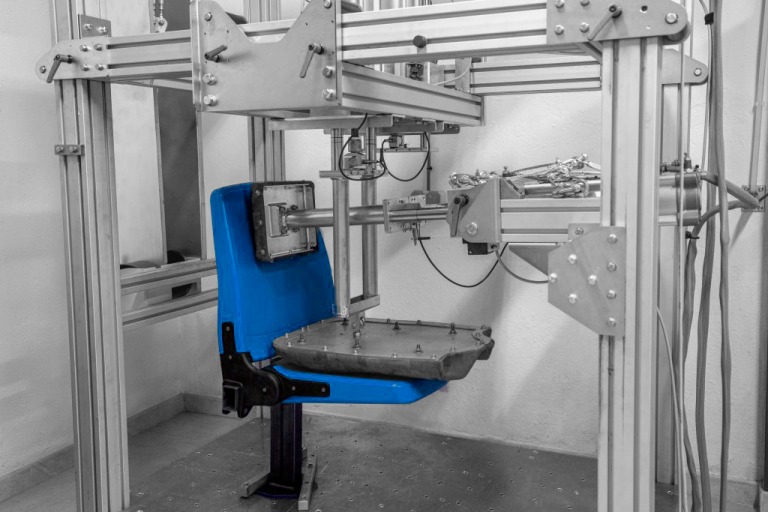
This standard requires the material to be verified by an accelerated ageing chamber test lasting 2,300 hours and then evaluated for:
- retention of mechanical properties,
- colour stability within parameters defined by the client (the standard does not set a single colour threshold; acceptance criteria are defined in the project’s finishes/specification documents and technical requirements).
Objective measurement of colour stability (CIE Lab* and ΔE) To avoid subjective interpretations of colour loss, colour variation is assessed using standardised colourimetric parameters in the CIE Lab* colour space. This system allows the colour difference between an initial sample (before testing) and an aged sample (after UV exposure) to be quantified objectively, by calculating the ΔE (Delta E) value as an overall indicator of colour change.
CIE Lab* system parameters
• L*: lightness (black to white)
• a*: green–red axis
• b*: blue–yellow axis
The ΔE value integrates the combined variation of these three parameters and is used as an acceptance criterion according to the project‑defined requirements. The lower the ΔE value, the smaller the perceptible colour variation.
In this way, colour stability ceases to be a visual or subjective criterion and is assessed using a reproducible technical indicator, enabling objective comparison of materials, formulations and solutions after the accelerated ageing test in accordance with UNE‑EN 13200‑4.
It is the manufacturer’s responsibility to carry out the tests and quality controls required to guarantee these properties. Daplast seating technical documentation explicitly states UV light protection in accordance with UNE‑EN 13200‑4.
Safety and liability: A UV‑related failure is not only an aesthetic issue. A polymer embrittled by solar radiation can lose elasticity and impact resistance, compromising spectator safety under dynamic loads or vandalism. Therefore, strict compliance with the tests under UNE‑EN 13200‑4 (and its linkage to use levels supported by UNE‑EN 12727) is the objective basis for defining technical specifications with confidence.
What is the difference between UNE‑EN 13200‑4 and UNE‑EN 12727 when evaluating a seat?
- UNE‑EN 13200‑4: product requirements for seating in sports facilities.
- Within UNE‑EN 13200‑4, mechanical strength, durability and safety are assessed in accordance with UNE‑EN 12727, which details test methods and criteria.
| UV Risk Factor | What does the technical test evaluate? | Project Impact | Decision‑making Priority |
| Aesthetic degradation | Colour stability and uniform gloss change. | Visual appearance of the seating bowl and fidelity to the original concept. | Architecture / Design management |
| Mechanical degradation | Retention of properties and impact resistance after 2,300 h. | Spectator safety and resistance under severe use or vandalism. | Engineering / Safety consultancies |
| Environmental uncertainty | Real ageing under site‑specific conditions. | Budget deviations due to future maintenance costs. | Contractors / Clubs / Local authorities |
For how many years is the colour maintained “without significant visual deterioration”?
There is no single answer because it depends, among other factors, on:
the colour (not all colours have the same stability),
the solar radiation at the location (not uniform worldwide),
the seat’s real orientation and exposure.
Environmental variability has a direct impact on the project life cycle: a selection based only on the initial cost can lead to premature replacements (logistics, removal/re‑installation, partial shutdowns), increasing OPEX and total cost of ownership (TCO).
Does UV radiation affect only colour, or also impact/brittleness?
It affects both. UV radiation causes degradation of the seat material, which is why UNE‑EN 13200‑4 requires mechanical properties to be assessed after accelerated ageing (2,300 h). These test hours should not be interpreted as a direct equivalence to years in service, but as a standardised comparative criterion.
Key conclusion for structural validation: UV stabilisers do not only protect colour; they also help protect the base material against degradation and embrittlement, sustaining mechanical performance.
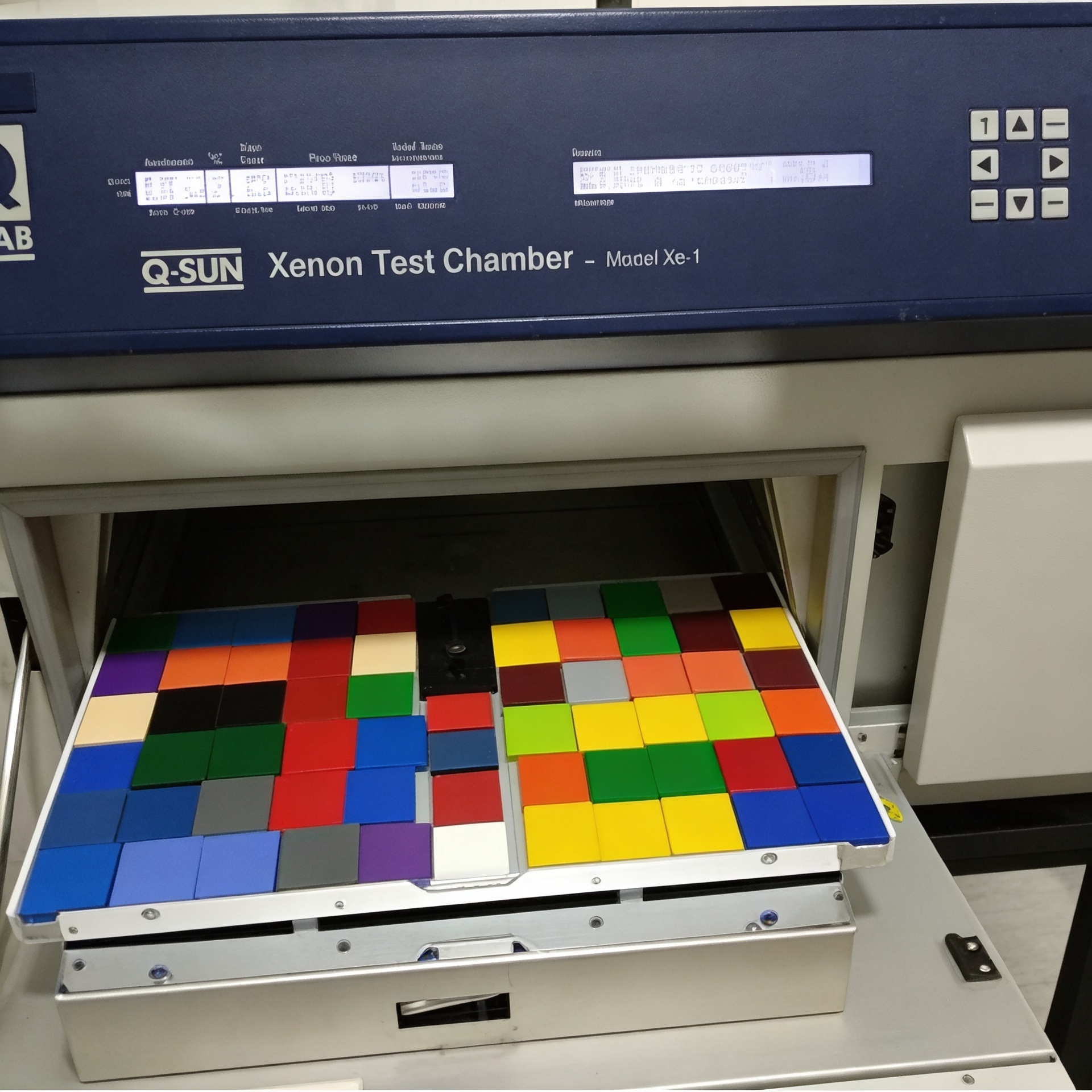
What UV resistance testing does Daplast carry out?
Daplast internally qualifies all materials and pigments before they are commercialised. The process includes:
- verification of material processability and integration with the rest of the material,
- UV radiation testing via two routes: accelerated ageing chamber testing and natural exposure testing.
Accelerated ageing chamber tests, as part of our internal comparative studies and material selection, can exceed 8,000 hours, enabling long‑term behaviour analysis and selection of the best solution for each project.
How does geographic location influence UV behaviour?
Solar radiation is not homogeneous globally, and this variability has a direct impact on the long‑term behaviour of seats installed outdoors.
To quantify this difference, the Kilo‑Langley (KLy) is used—a unit that specifically measures exposure to ultraviolet radiation per square metre over the course of a year.
This indicator makes it possible to compare objectively the severity of the environment to which a seat will be exposed:
- In Northern Europe, typical values are around 80–100 KLy/year.
- In regions with higher insolation, such as North Africa or Central America, values can exceed 160 KLy/year.
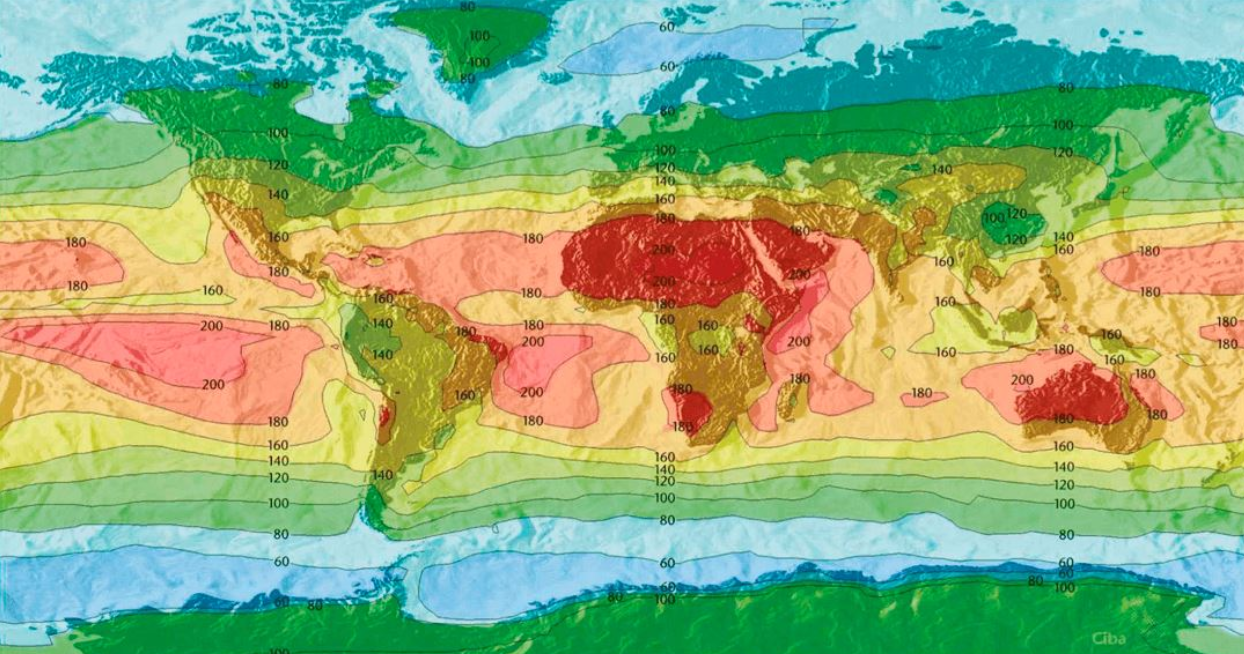
These differences significantly influence the expected service life of each colour and formulation, because the higher the accumulated radiation, the greater the demand on the material, pigments and UV‑stabilising additives.
From the perspective of economic planning and the project life cycle, a choice based solely on the seat’s initial cost—without considering the actual radiation level (KLy)—can lead to premature degradation. This may force reinvestment in removal, logistics and re‑installation within a few years, noticeably increasing the venue’s OPEX and total cost of ownership.
Good practice: in high‑insolation projects, it is advisable to request specific technical guidance from the manufacturer on the most suitable colours and pigments for the site, taking into account accumulated solar radiation values and the project’s durability objectives.
What resources does Daplast use to improve and guarantee UV performance?
Daplast has more than 50 years of experience working in regions with high UV radiation. Since our beginnings, we have worked on sports venue projects in Southern Spain, with high levels of solar radiation.
Our experience installing seats in countries in North Africa and Central America has shaped our quality processes and materials research so that our seats are highly resistant to ultraviolet light.
To reinforce technical control, we combine:
- an accelerated ageing chamber (Xenon) for comparative studies of materials and pigments (with internal tests exceeding 8,000 hours),
- and real natural exposure in our laboratory in Córdoba (Spain), one of the areas with the highest levels of insolation in Europe.
This approach enables us to cross‑check controlled laboratory data with empirical validation under real conditions, and to select materials and pigments with the best behaviour against UV‑driven ageing for each project.
Conclusions:
UV resistance in a seat should not be treated as a “yes/no” attribute, but as a verifiable set of material, formulation and process decisions.
To specify with confidence, always request test evidence in accordance with UNE‑EN 13200‑4 (and the associated tests). Discuss the most suitable/recommended colours with the manufacturer based on their experience and review the warranty scope in writing—it must be reliable and consistent with the analysed data.
This helps minimise the risk of colour change, premature brittleness and mid‑term replacement costs.
Are you defining technical specifications, calculating safety requirements or planning the life cycle of your next seating bowl?
Daplast can advise you on finding the best technical seating solution for your next project.
To find out more, visit: https://daplast.com/en/2026/06/10/uv-resistance-stadium-arena-seating/
Daplast is a longstanding VIP Sponsor of Sports Venue Business (SVB). To find out more, click on the image below…

SVB LIVE provides an unrivalled, global community, with opportunities to network, collaborate and explore new possibilities year-round via the SVB LIVE Business Club.

Check out the latest sports & entertainment venue development data from across the globe in the exclusive, subscription-only, SVB Global Report here.