- December 18, 2025
- Posted by: SportsV
- Categories: Featured Articles, Features, Home News, Industry News, Interviews, News, Press Releases
For much of the past decade, the prevailing narrative positioned live venues in direct competition with at-home streaming. In 2025, the landscape looks different. Audiences are showing renewed interest in shared, in-person experiences—particularly those that are accessible, cost-conscious and differentiated enough to justify the investment of time and money.
This is a moment of opportunity for stadiums and arenas. Whether welcoming a new generation of fans or drawing back audiences who haven’t attended since before the pandemic, operators now have a single chance to make an unforgettable impression. Failure to deliver risks the fate of streaming platforms that mishandled live events—like Netflix’s highly publicised Mike Tyson/Logan Paul fight, which drew massive interest but collapsed under technical failures and poor execution.
Venues cannot afford that kind of misstep. They must raise the bar, blending cultural resonance with operational excellence, delivering immersion without overspending, and transforming facilities into what VITEC’s Myriam Calaber calls “experience engines.”
From Screens to Stories
The core challenge for operators isn’t whether to install more displays—it’s how to turn those tools into experiences that cannot be replicated at home. Bigger screens and sharper replays alone no longer impress. What fans seek is immersion: the feeling of being part of the event, not just watching it.
This shift has serious implications. Every AV investment must be judged not only on clarity or coverage, but on its ability to create connection and participation. Displays, overlays and signage are no longer technical decisions alone—they are levers for shaping emotion, building memory and reinforcing the value of showing up in person.
Myriam Calaber, EMEA Venue Sector Industry Engagement Executive at VITEC, explained:
“The value of the live experience needs to be unmistakable—emotionally, visually and socially. You’re not just showing content. You’re building a story around the fan—immersive replays, augmented overlays, branded activations—anything that makes the fan feel excitement, presence and community.”
The venues getting this right are those that think holistically. Instead of treating AV as a utility, they design ecosystems where every touchpoint contributes to a continuous, multi-sensory narrative: premium suites that feel personal, concourses that feel alive, activations that spark energy across the crowd. In doing so, AV shifts from a cost centre to the connective tissue of the fan experience.
The 2026 SVB LIVE Conference & Exhibition – with its focus on elevating the live experience through key pillars including Fan Experience, Hospitality, Fit-Out & Interiors, Premium Sales & Service and Technology – is being hosted at Everton’s spectacular new Hill Dickinson Stadium on October 1st and 2nd.
Strategic Technology Investment
The paradigm has shifted: operators are prioritising measurable fan value over flashy add-ons, as Calaber explained:
“Every investment has to do more: reach more fans, drive more engagement, and deliver measurable returns.”
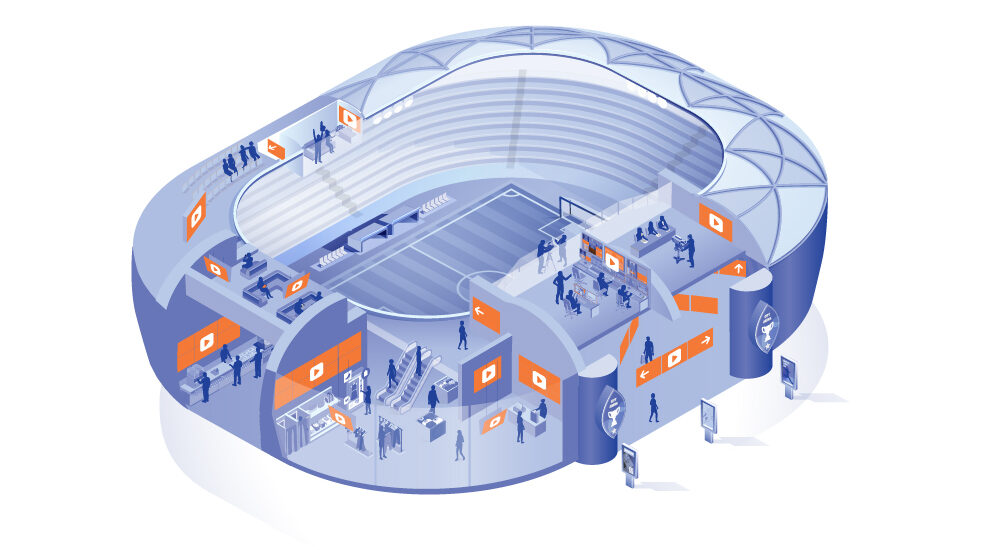
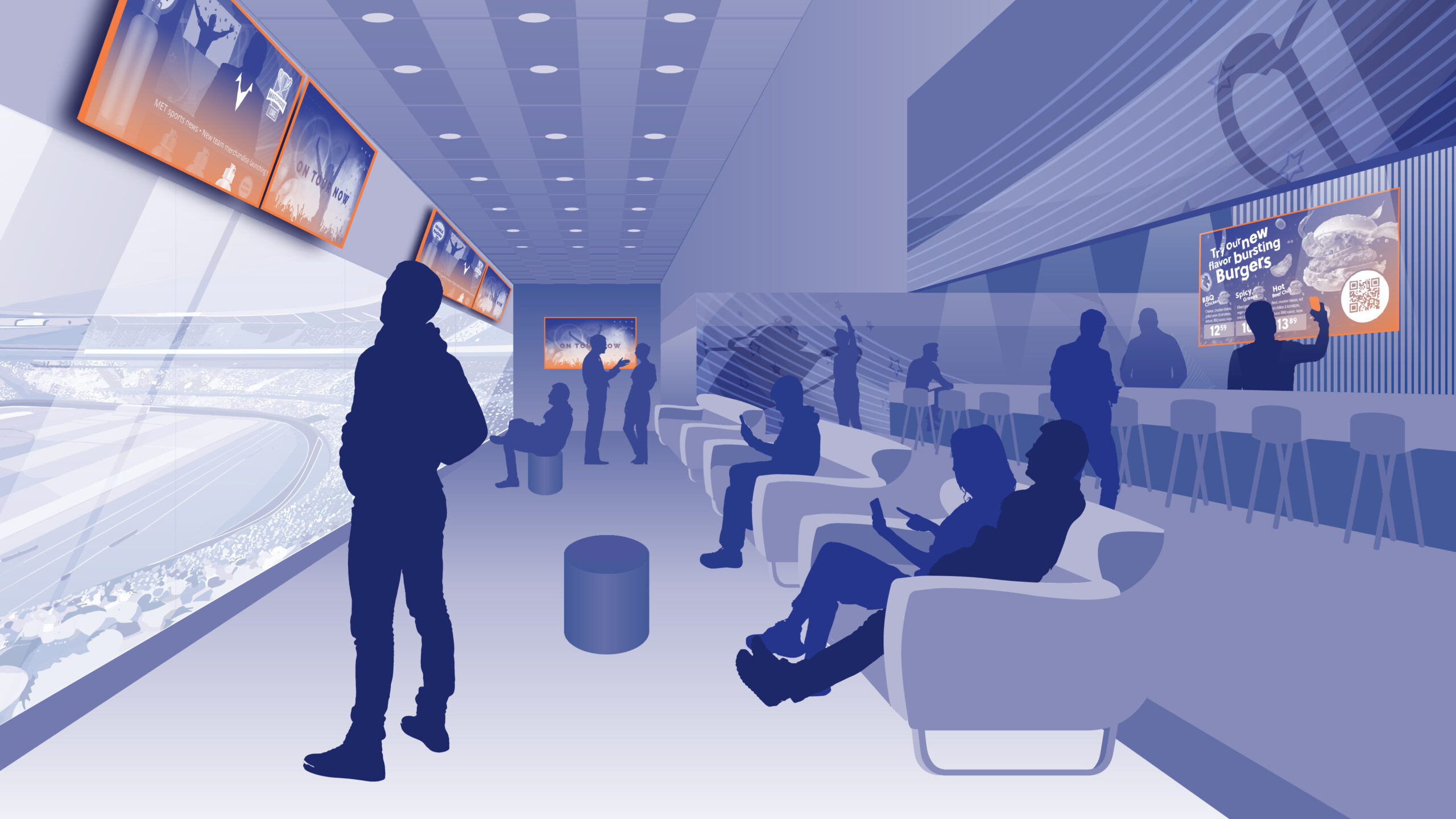
Leading venues are leveraging IP video and centralised management to optimise display networks instead of adding large quantities of underutilised screens. Many are investing in on-site production studios to deliver curated content across lounges, concourses and even mobile devices. Real-time engagement features—fan tweets, trivia or Kiss Cam moments—strengthen the bond between fans and venue, while augmented reality apps extend that engagement through second-screen experiences inside the building.
The common denominator is agility. Fans expect seamless, intuitive interactions. Infrastructure must be able to keep pace.
Cost Control Meets Operational Agility
Economic pressures remain real. Inflation, rising energy costs and staffing shortages mean that AV investments must deliver more with less.
Calaber noted:
“You don’t need hundreds of displays if you can optimise the footprint and control what each screen delivers in real time.”
Existing systems can often be extended with AI, replay features or mobile integrations—unlocking new capabilities without requiring a full overhaul.
Unified workflows are equally important. Event teams stretched thin—managing AV, streaming and signage for multiple events a week—simply don’t have time to babysit fragile systems.
Calaber stressed:
“They don’t have time to babysit fragile systems.”
Centralised platforms allow content to be managed once, deployed everywhere, and tracked for engagement. That efficiency is now as valuable as the fan-facing features themselves.
Adaptability and the 365-Destination
Adaptability is no longer optional; it is the defining trait of leading venues. Fans expect experiences that feel current and personal, and operators are responding by designing systems that can evolve.
This mindset extends beyond match day. The “365-Destination” model positions venues as permanent cultural and economic anchors.
Fulham’s new Riverside Stand, Fulham Pier, hosted a sold-out SVB LIVE Networking Event in June, with the 300+ industry professional attendees treated to a VIP tour of the spectacular new venue courtesy of event partner Portview, with sponsors Accredit Solutions, Sodexo Live!, Global Payments, iXpole and Populous.
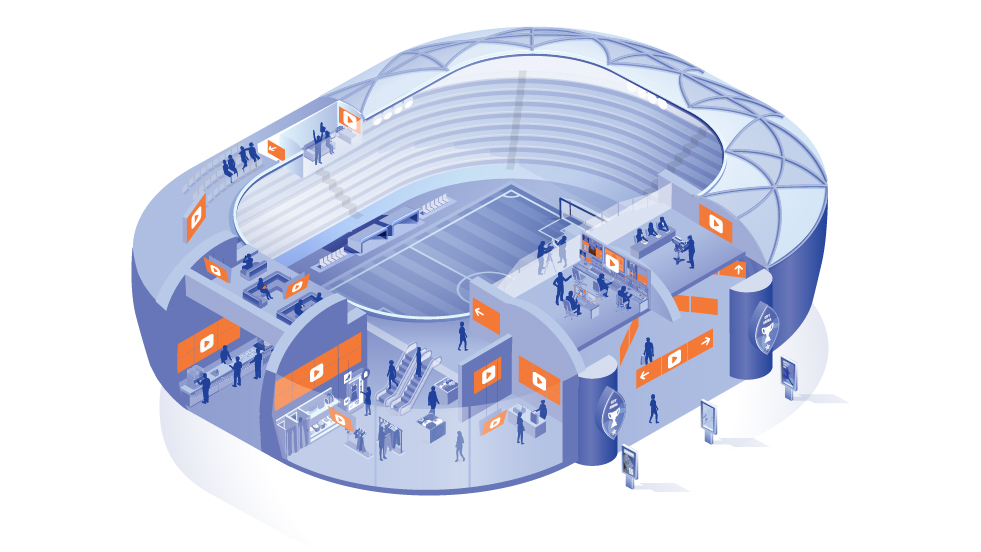
Craven Cottage, home of Fulham FC in London, exemplifies this approach: its new Riverside Stand / Fulham Pier activation leverages IP video infrastructure to support not just match broadcasts but also business events, VIP activations and community programming.
Calaber said:
“That’s the evolution. A venue becomes a destination in and of itself. And that changes how you think about your AV investments—it’s not just about game day. It’s about creating value every day.”
The Competitive Edge
Ultimately, Calaber argues that the future belongs to venues that deliver moments worth remembering:
“The stadium isn’t just a place for a game anymore. It’s a platform. It’s an experience engine. And most importantly, it’s a space for reconnection.”
She recalls attending a video mapping show at the Reims Cathedral in France:
“It wasn’t a traditional live event, but it was profound. People of all ages and backgrounds were together—learning, exploring, even just standing in silence. We weren’t just watching. We were part of something.
“The crowd became a community. The experience wasn’t just immersive—it was shared. And in hindsight, it felt singular and lasting. That memory illustrates what live venues can achieve when technology amplifies emotion rather than simply delivering spectacle.”
Calaber emphasised:
“The smartest investments aren’t just about more screens or better bandwidth. They’re about using technology to create singular, shared, unforgettable moments.”
In an era when audiences are always online, choosing presence—gathering, unplugging and connecting has become rare and valuable. Venues that can foster those experiences will not only thrive in 2025; they will lead.

Author credits:
Huge thanks to Myriam Calaber, EMEA Venue Sector Industry Engagement Executive at VITEC, for these industry insights.
Source & imagery, courtesy of VITEC
SVB LIVE provides an unrivalled, global community, with opportunities to network, collaborate and explore new possibilities year-round via the SVB LIVE Business Club.

Check out the latest sports & entertainment venue development data from across the globe in the exclusive, subscription-only, SVB Global Report here.